
Vilcabamba Makes it’s Case

Welcome to the Rodeo. It’s been over a year since I’ve visited this travel experience on this blog. This past year was the most profound year of my life; it was the most transformative, the most painful, the most hopeful, the most frustrating, the most difficult, the most challenging, the most faithful, the most fostering, the most beautiful, the scariest, and the most rewarding all bundled up together via one trip around the sun. There’s a whole story of this past year that is worthy of it’s own book yet to be written, a heavy one at that. I’m not sure it’s worth a read, or if it would be meant for my eyes and ears only. For those that have followed this journey and saw it drop off a cliff, I wanted to send out a precursor statement to this entry letting you know I’m trying to commitment more time and energy to riding this wave until it breaks back at the beach. I’m doing this for me first though, I’ve been trying to keep the focus on that to make sure it’s for the right reasons. I originally set the intention to create a trip from start to finish, and although it’s long been finished as an adventure, it still has some pages that my heart needs to revisit and express into written words with images of moments frozen in time. I want to get all the way back to home plate with this at bat, to see the sunset we’ve been headed towards for so long. Precursor over.
VILCABAMBA

Leaving Cuenca felt like the right thing to do. We didn’t even have a thought that would hold us there or any more curiosity lingering for another evening spent feeling the curve of the cobblestones on our feet. We’d sat at it’s table with a sizeable feast in front of us, indulged ourselves, and left no room for even the smallest morsel to land. We took a look at the map ahead of us and let our thumbs drift towards the border of Ecuador, eventually pausing at Vilcabamba. This was a place we heard about from a few travelers we met back in Colombia in El Cucoy, which seemed like ages ago at that point. The time warp of constantly wandering is palpable, weeks can feel like months, so on and so forth. Vilcabamba also carried a theme related to time and it’s curious storytelling ways. It was nicknamed the valley of longevity for it’s notoriety from many of it’s elderly population claiming to be 100+ years young, by their own accords. As legend has it, the rich, fertile mountain valley provides a peaceful, hearty way of life that is abundant in quality food, fresh air, lots of exercise, and something in the water of course. This was enough to steer us in that direction for a nice layover while we kept Peru in our sights. The town did seem a bit out of the way and doesn’t have a great direct route to cross the border into Peru so it had been kept low key in a good way from what we had gleaned. We also had high hopes of donating our soccer balls amassed at an earlier adventure in Salinas in Vilcabamba as it seemed to be a more remote kind of setting on the surface. At this point they were dead weight in our bags, and we were starting to get anxious to find a permanent home for them. We grabbed another 6-ish hour bus ride and beat feat for the lush valley we’d been waiting for.


Our arrival in Vilcabamba was perfectly timed with a nice, soaking rainstorm. Through the foggy windows I could make out a lot of green, lush vegetation both in the town & in the distant horizon. It was easy to see that rain was an integral part of this valley’s existence and must be a frequent visitor. We were dropped off in a small plaza and quickly found a hostel a stones throw away from the bus depot. It wasn’t the best place I’ve seen, but it would be shelter for the evening. We conceded and spent the night there, with the sound of rain and the cool breeze blowing through a visible gap between the roof and the walls of our bedroom. We woke up to see the clouds starting to clear up and the entire valley shaking off what was left from the torrent the night before. We thumbed through our guidebook to find what sounded like a better long term place to hang our bags a little outside of town in an eco hostel run by a biologist & his wife. It was noted that if you helped with some eco related activities and did some grunt work some discounts were offered on your nightly rate. We didn’t mind getting our hands dirty and felt like helping to preserve a little bit of this land wouldn’t be a bad thing either, so we put on our packs and started to walk through the sleepy village.


The town itself seemed to be very quiet, and left me with the impression that there were a lot of buildings sitting empty and waiting for some life to be breathed back into them. It was as if part of the lifeblood of the village missing. The beautiful cobble streets and plazas let us in on their modest activities, the occasional villager milling around, a trio of women catching up on a crisp morning stroll, and a few open doors for restaurants created the hum of this community. But just around the corner and onto smaller, more modest streets the town seemed pretty bare and noticeably quiet. Oversized vacant soccer fields, seemingly abandoned rodeo grandstands, and empty playgrounds added to the theory that everyone was on vacation and out of town. We kept marching down calles and past silent homes & hotels of yesteryear until we left the last few buildings behind us. Up ahead we came across a swift, muddy river that was carrying all the riches from the mountains over boulders & cobbles and past the floodplains below. A small bridge made of wood & steel carried us to over to the driveway that would lead us to our host’s house. With a knock & a hearty hello, we met Orlando, who was an eccentric character passionate about ecology, knowledge, and health. His hand built cabin was stilted & very comfortable to raise a small family along the river valley. We asked lots of questions I’m sure he’s answered a hundred times before, but his answers were earnest and not contrived in the lease bit. As he spoke I glanced around his home, noticing the hundreds of books that lined the walls and spoke of his passions in life without uttering a word. He lived & studied in the Galapagos islands years ago, one of the few that devoted a better part of their lives to studying and observing the natural world that is fading slowly from existence with the interference of humanity. It was easy to see that he carried his passions for nature into his home setting, as his hosting environment was heavily based on ecological impact, interaction with nature, and a sense of peace & tranquility that comes along with those intentions in mind. We inquired about some information we read somewhere that he would offer some discounts in exchange for some elbow grease with his land, and made a deal with him to work for a few hours for a reduced rate and agreed to take part in whatever it was that led us there at some point for our stay. Orlando showed us our cabaña and we settled into our new home.


This part of our path coincided with the big election that we had all but forgotten about during our travels. We prepared ourselves by making an on the road version of pad thai in our little commode before heading out into town to watch the presidential election results come in. While we swilled on a few cervezas a TV with English subtitles played silently on the glowing screen in a nearly empty pub. Until then we had only stumbed across a few newspaper clippings on the ground highlighting the differences & anticipating a close race between Obama & Romney. We had been hoping for another 4 years of leadership we could be proud of, and weren’t really interested in seeing what shift in course a 4 year Romney term would have on our country. Being on the go since the early campaign season we were spared virtually all of the election drama that comes with being captured by non-stop media coverage that America thrives on. We’d only get tid bits through international filters, which was plenty. Living through election years in the states has become increasingly cumbersome & feels more and more like a sport as time goes on, one where the winners are feasting on advertisements and the whirlwind of campaign money and the losers are the ones that get completely swept up into the parade. It was pleasant to be unplugged while that has happened, and considering what we’ve been through since I can look back on that time as truly peaceful. This particular race was very close until later in the evening, at least how it was filtered through the media, and we stayed out till around 11 or so, enough where it looked as if we weren’t going to have to live with a Romney/Ryan ticket. That was good enough for us.

The following morning we chose to engage Orlando in his plot to get visitors to donate their labor for his land for a slight cut in the price to hang our backpacks. One thing that I learned that can honestly say I’ve kept with me forever is this guy’s disdain for Hypoestes phyllostachya, commonly known as the polka dot plant. As we learned from our host, this was a highly invasive species of a common household & outdoor plant that was brought to the area most certainly by expats. It is a very easy plant to grow, and spreads like the flu in an elementary school in Vilcabamba’s lush climate. Orlando was hell bent on eradicating these plants from his property, but seemed to be losing the battle. We offered to help him weed these buggers out for about 4 hours in exchange for a discounted nightly rate, which at first glance seemed like an easy task. About an hour into pulling up the tiny, fragile stalks from the earth it became clear that this battle was fruitless, and more of one person’s revenge on an enemy that has unlimited resources to keep coming to the battlefield. We dug, and twisted, and pried these things from the ground and after about 4 hours of work had a few piles and about a 20 foot section cleared out, with thousands of small, pink polkadots staring blankly at us from all directions beyond our graveyard. To this day when I come across one of these things my jaw gets tight and my shoulders lock into place as if I’m still digging in the weeds & hoping for progress that isn’t resulting in a visibly tangible way.


The next day we decided to check out some of the trails Orlando carved out into his wild landscape on the back side of his property. There were a few trail heads that went up and around his land, each with a name tied to poets, philosophers, and thinkers. We chose the Rumi path, which had some pretty tight gains on muddied pathways peppered with roots & branches for traction and overall assistance on the way up. There were a few “contemplative” vistas overlooking the valley & the town that offered some great perspective on the landscape helped shape the community and carried with it the lore of the longevity tied to it’s reputation. The gentle folds of the mountains in the distance provided a barrier around the valley, undoubtedly shaped by the river through millennia of floodwaters breaking apart the land bit by bit. It was indeed a perfect spot for a town to sprout up from the earth and simply exist. After going over several crests the path led us back down towards the river and on the back side of the property. There were a few futuristic looking houses a little further downstream, almost alien like in their appearance and surely built by an expat with a weird dream. Chasing the river lead us to some stilted cabins that we were drooling over, rentable tree house like rooms that were way out of our budget at this hostel and nestled up right near the river bed. We passed the small area we weeded out a few days before and noted the shriveled pile of plants we had uprooted among the rest of the survivors waiting on the edges of the paths.


Vilcabamba showed us a slow, sultry pace of life that being in a remote nook of Ecuador can foster. It definitely felt like an area where you could plant yourself and grow old in an easy going way. The radiant force of the sun was certainly beautiful, clouds were frequent guests, and rain was no stranger to this valley of longevity. We parted this town and took a quick layover in a border town right on the edge of Peru. That same old feeling crept into our veins, being on the edge knowing we were about to leap into a new country with new things to learn, a new beat to feel, a new way of life to observe. The feeling of excitement and the to be determined sat right in front of us, an imaginary line in the sand that we’d sink our shoes into the very next day.

Last Year at the Folk Festival

Every year around the beginning of summer the Folk Fest stirs up something from deep within, a feeling that gets amplified with each passing week. I can tap into the feeling of the energy in the moments I experienced in the years before. It feels as if I bottled up all of the overflow of the festival as it was happening, and buried it within myself in a biodegradable container that had a shelf life of about 10 or 11 months before it started leaking. The holes start out small, spilling a drop or two of moments at a time. Eventually the bottle explodes and I find myself on a kayak paddling across the harbor between sailboats feeling the vibrations blast across the choppy waters and right into my soul. Each lap full of water is a right of passage, I consider them a gift in the sweltering heat that July often brings. The thermometer usually tips the mid 90’s by the end of July, and 2016 was no different. The drought had been transforming fresh New England air into hot, dry, & stale puffs rising from the scorched earth for the past few weeks. But alas, all of this vaporizes in the air when you’re standing in line waiting to get through the check point at Fort Adams once again.


The lineup for 2016’s fest was of particular interest for me, and the blend of genres & artists didn’t have any potential for disappointment. I’d been following a handful of these artists for years and getting to see them all against a backdrop of granite columns of Fort Adams is something worth writing about, even if I don’t have many words to put down onto the screen for this one. For some comedic relief & reliving the vibes of yesteryear there was Flight of the Concords on the Main Stage. To get that down to earth quintessential Folk Fest engine revving there was Langhorne Slim playing in the museum stage (the most underrated stage in my mind). Elvis Perkins was doing his best to help you remember why you like music in the first place. Nathaniel Rateliff & The Night Sweats gained some new fans on the main stage bringing some serious energy to the grounds, forcefully making hands come together & getting the whole crowd roaring. Edward Sharp & The Magnetic Zeroes put on a show that anyone attending would not soon forget, spending a majority of the show wading through crowds of fans and keeping everyone on their toes. The music is happening all the time in every corner you wander into, and it really doesn’t get any better than that.


Finding the right blend of stages to place yourself at is usually the main challenge that I have with each festival. There’s usually great music going on at 4 different areas and they all overlap each other, leading you to have to make sacrifices & decisions as to how much of any particular set you can watch without missing someone else you are pining to hear. In 2016 the bonus challenge was how to stay hydrated at temperatures projected to be hovering around the 100 degree mark. The weather forecast was not calling for clouds of any substance, so refuge from the sun was going to be limited at best. The tents tend to be some of the most sought after seating in the fest, add to that a blazing hot sun & soaking wet humidity to further drive the demand for that kind of real estate. Hanging around close enough just to grab a little bit of that solace from the shadow of tall person or stealing the corner of the roof line can feel like everything when the sun is pummeling your skin. The music seems to be better the more you have to work for it, as with most things in life that are earned. If there was a front row seat waiting your arrival at every stage I think it would make the journey less rewarding if that makes any sense.


In my new goals to keeping posts & thoughts more concise, I’m going to let the images do the rest of the talking. Another year came and went, and it took me a year to write about it in the end. Reflecting is it’s own reward in many ways, as I got another chance to relive last years moments & captures once again before getting ready for what this year will bring. Once again, almost a tradition at this point, we find ourselves a few days out without tickets or a way to get in. That mention of earning the experience in the last paragraph has weight to it, and however it happens to wind up this year is the way it’s meant to be. I look forward to it.
-Dr.

Cuenca, Guayaquil, and a Little Bit of Montañita

There’s a feeling that I can’t seem to shake whenever there’s an unknown just over the horizon line. My mind yearns see and to know what furtive features lay claim to the earth just beyond eyesight around the next headland. I can’t live another moment until I know life in the small colonial village on the tucked way up in the mountainside. I need to be tired and thirsty in the next rough and tumble desert village or else my life would be incomplete. It was probably for one or a combination of those kinds of sentiments that we left our little room in Puerto Lopez and headed a little further up the coast for Montañita. It felt like it was time to move along to see what was next.

When we arrived at Montañita we quickly noticed that it was packed to the gills with the kind of company we unfortunately weren’t looking for. It happened to be Halloween weekend and we foolishly weren’t anticipating the scene that was slowly unfolding. Our routine first walk through the village after getting let off the bus revealed a casually cultivated surf town scene gearing up for the big weekend ahead. There were large beach style bars and clubs blasting music in the middle of the hot afternoon, each one practically devoid of patrons and all were advertising Halloween parties & drink specials. The calles were teeming with beach shorts and hand made jewelry being hawked from street blankets. Montañita was a popular weekend getaway destination for urban Ecuadorians needing some of those weekend beach scene vibes, and that was definitely in full play while we shuffled our backpacks around trying to figure out where we were crashing for the night.


The hostel market was to be expected given the volume of people in town. Prices were inflated and supply was low. After getting turned away from a few joints without vacancies, we found a bar hostel that had a few levels of rooms above the ground level restaurant. The faces of most other patrons were young and energetic, which were telltale signs of the perfection combination to neutralize any expectations of getting a solid nights sleep. We quickly set off to explore sans heavy luggage to try to get to know the area better and melt away our first impression. The beach was naturally the first place we chose to scope out, walking among the weekenders & wanderers on the flat sandy shelf that reached out across a huge inlet between two tall rocky headlands in the distance. Hippies selling fortune readings, weathered locals selling ice cream, and purveyors pushing horseback riding along the beach were slowly making their way between colorful sun umbrellas, some surf boards, and beach blankets. The ambiance was very calming listening to the gentle waves continually lapping on the long low tide beach that stretched out into the shallow waters in the distance.

The rocky headlands on either side of the village were stunning. We took a long walk after a short horizontal stint on the sand to investigate the large yellowy-orange pillars that sheltered the bay. What we found was a naturally carved landscape complete with colorful tidal pools & giant cartoon-like rock tuffets set on a backdrop of smooth sandstone walls. Thousands of years of waves and wind peeled back these cliffs creating chasms of all sizes and pitting the tidal bedrock. We marveled at the small worlds that existed inside of the shallow bowls of water left behind with the receding tide, all teeming with life and flaunting their exotic hues. It was in these areas that a few young men were collecting shellfish of all shapes & sizes to sell. They were on their hands and knees, reaching into little pockets of water the picking out the natural bounty the ocean fostered.


After a night in town we grabbed an early bus back to Guayaquil. We were going to meet back up with Erik with our eyes set on getting down to Cuenca. Erik put a sweet ass roof over our head once again, and later treated us to one of his favorite dinner spots downtown. He spoiled us with a few buckets of hard shell crabs, a meal complete with wooden hammers and splash bibs. We feasted and talked about the upcoming weekend we were going to spend taking in Cuenca. When Erik first visited Cuenca he had a chance encounter upon a vendor who led him to a secret storage room full of Ecuadorian treasures. He settled on a pair of llama wool chaps for the time being, but something else caught his eye that he passed up on that trip. One thing on his short list for this trip was to find the same woman in the market who brought him to the backdoor marketplace to buy this item.

The bus station in Guayaquil from memory was overwhelming to say the least. It’s was a massive, mini mall sized building that seemed to have hundreds of transportation companies going in various directions at various times on various levels. The steps involved finding the right company’s booth (typically grouped together by destinations they travel to for the most part), buying the tickets, then go find the terminal and hang out close by until they announce the bus is departing. That morning we took yet another old bus across the South American landscape near the equator, which didn’t seem to be getting old. I remember feeling like it was a beautiful time to be alive, rolling through the hills of a new country towards a new city.

When we arrived we shacked up at the only place we could find with a vacant room. Cuenca was celebrating it’s independence day that weekend and was absolutely stuffed to the gills with people ready to partake in the festivities. After dropping off our gear we wandered into town to explore and get in tune with Cuenca. It was easy to see just how beautiful this old town was the minute our shoes hit the cobblestone streets. Cuenca is believed to be the most European city in Ecuador due to it’s abundance of 16th & 17th century architecture. Spanish Colonial relics were everywhere your eyes could walk, dominating the landscape in the most beautiful way. Elaborately decorated archways, stone pillars, and stoic facades warmly welcomed our worn out rubber soles without any effort whatsoever. I can close my eyes now and picture the oversized churches & buildings in the plazas, the red clay tiles spilling over each hipped-roof onto the next, and the abundance of white washed buildings accented with period details & iron work. There was a buzz in the air and tons of people on the beat, all making their way through life in this pretty old city.


Erik brought us to the outdoor market he was seeking which was very similar to most any market we’d encountered Latin America. Makeshift stalls comprised of corrugated steel roofs selling anything from leather goods to cook wear, lots of small booths selling food and drinks, plots squared off by blankets selling produce, and tables covered with locally made clothes & textiles. I spotted woman selling fresh coconuts and ordered one up without any self control. Post coconut Erik found the very same vendor he had purchased the llama chaps from on his previous trip. After asking her a few questions she pulled out her cell phone & set up a meeting with someone else. She led us to the edge of the market in front of a building, where a man opened up the door and let us all in.


We stepped into a dimly lit entryway and followed them up the dark stairs onto the 2nd floor. After a few twists & turns through empty hallways the man opened the door to a large room and hit the lights. After a brief moment the contents of the room came into focus and my brain started processing the walls full of brightly colored handmade treasures. Everything sold in the market outside seemed to be living in this room: odds & ends of all shapes & sizes, hats, toys, painted instruments, shoes, & clothing all adorned the shelves of every wall. I recall that it didn’t take long for us to uncover some more llama chaps, which all of the sudden seemed like an item I might need for our trip. Eventually an item was found hanging from a corner & it was brought to Erik and placed into his hands. I couldn’t see what he was holding at first as his back was facing me, but when he slowly started turning around the light hit the long shaft of what I would come to learn is a Pizzle. As it turns out, this whip is made from the sinew of the male counterparts of a bull, dried and swizzled into a long, firm shaft. It seemed to be a traditional tool of sorts and carried a hefty price tag. After some thought, he decided to purchase the whip he had sought to add to his travel collection and we headed back out into the market.


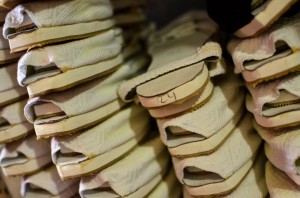

While we passing through one of the plazas, a man shining shoes stopped us to ask if he could polish our shoes. Upon closer inspection, he noticed that my tan sneakers & Elissa’s boots were exactly contenders for shoe shine therapy. In Erik’s black synthetic leather Nikes, however, there was potential. I laughed at the notion, but Erik actually took him up on his offer and he started immediately polishing Erik’s sneakers with tremendous vigor. He used a healthy amount of black shoe polish to get those low tops gleaming at maximum shine. Erik’s shoes never looked more fly, never turned more heads, & were never more ready to carry him with 100% confidence down those old Spanish Colonial streets. Armed with his shiny shoes & his new Pizzle, Erik was arguably unstoppable and this point.


The city was having a world cultural fair that day and a big part of the event was held along the banks of the small river that cut through the city. Vendors sold items sourced & made from all different parts of the world and each tent was worth a solid once over at the very least. While browsing some leather bags a stranger wandered up to Erik, noticing the whip sticking out of his backpack. He asked in Spanish if it was real, and Erik proudly replied “Si, es real”. He proceeded to inquire on where he could find such an item, to which Erik’s reply was “Solo uno amigo. Solo uno.” That interaction itself was almost too much to handle, like a scene out of a Latin Seinfield episode. After browsing the crafts we decided it would be best to hang down by the river for a bit and take in the scene while the day sauntered by. Later that evening we went out for a few drinks at some odd club of sorts called La Parola. There was live music going on that evening at a volume that commanded your entire attention, making little room for casual conversation. After a few cervezas we decided to call it a night. Calle Larga was bustling with folks waiting in lines, milling about, and soaking in the sweet cool evening air.


The next day we had to vacate the hostel & transfer to another one in the center of the city. It was Sunday morning, and everyone was leaving town after the weekends festivities except for Elissa & myself. Erik had to get back to Guayaquil, & get back to his site project. We parted ways and bid our adieus yet again in life. After he took off, we went right back to exploring Cuenca to see what else we could figure out about this city. Eventually we stumbled into a huge indoor food mercado. The building was enormous and shaped like a gigantic hollowed out church meets airplane hanger, with ample space for hundreds of food stalls & produce vendors to spread out and sell their goods on any one of the 3 different levels. Each floor was an eclectic mix of food stations, smoothie stalls, produce tables, hot sauce shops, soup counters, and hot food plates with lots of communal tables & chairs to dine on. We eventually settled on barbecued pig roast, complete with an entire pig on a table and served by hand with rice & veggies. After some indulging and photo hunting, we left the building and continued floating through plazas, side streets, and cobblestone paths until our legs were giving up on us. We went back to our hostel, cooked a meal in our greenhouse glass kitchen overlooking the city and called it a night.


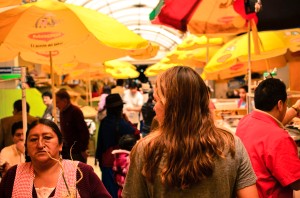


Cuenca was full of charm, full of beautiful architecture, and now some fond memories. It’s easy to see how one could fall in love with this postcard city in the mountainside, and it’s charming people didn’t help to dissuade the mirage any. If you’re ever in Ecuador, give Cuenca a shot and I’m sure you won’t be upset you did.

Fishing in a Fishing Village: Puerto Lopez, Ecuador

Forward:
It took quite some time for this post to come together. I blame that mostly on my currently off kilter work/life balance. When I started writing this, Puerto Lopez was a sweet, faint memory made of seafood, salty beach air, and deliciously slow sunsets. The humble, rough & tumble fishing village was as an easy blend of small town charm and low season volume in the few days we hung our hats there. Fond memories remained intact. Thoughts that used to sit on a lofty perch, safely nested in my memory bank waiting for me to brush the dust off whenever I felt the need to get a taste. That nest came crashing down to the earth when news of the earthquake this past April had surfaced. The tenacious 7.8 magnitude quake’s epicenter was about 12 miles below the earths surface near the town of Muisne along the northwestern coast of Ecuador, not too far from where we once walked down the dusty streets of Puerto Lopez. The quake and the aftershocks caused serious damage throughout the region in both rural and dense city settings and were responsible for over 27,000 injuries and roughly 650 casualties. The quake was strong enough to cause multiple structural failures ranging from residential homes in Quito up to a highway overpass in Guayaquil. Lives were both shattered and lost in this powerful display of the forces that are the inner workings of our earth. It was hard for me to muster up the energy to post this entry without thinking that it was bad timing for me to reminisce about our experiences that were based around casual travel observations and leisurely adventures in an area directly affected by this event. Puerto Lopez will always be a sweet memory in my mind, and ultimately a part of who I am. I hope this helps pay homage to the pretty little seaside village that we once knew, if only for a small moment in time.
-Dr
Still reeling from our blissful adventures in the high mountain cooperative village of Salinas, I knew that we had to keep our expectations in check and our minds open moving forward. We were most certainly following a seriously dizzying travel high down it’s shaky footings & back to reality at the solid surface of the earth. I realized this while we were riding in the collectivo truck back through the mellow & windy valley in the mountains. There we stood, two of us among twenty or so people, crammed in the back of a standard size pickup truck bed with the breeze blowing over our smiling faces as we slipped our way back into town. The ride back from anywhere always seems shorter than the way out for some strange reason, and that particular day yielded the same result. Before we could even get comfortable with the thought of letting Salinas go we were back in at a street side bus depot buying a one-way ticket to Guayaquil.


Our vintage Ecuadorian bus (complete with complimentary unbearably warm seating area, and scratched, dusty windows with vintage drapes) rolled us right out of the green and golden hills of Salinas down into a more flat & linear landscape. We passed through a few hours of endlessly flat green rice fields accompanied by the occasional house on stilts. Once in a while the large mats of green vegetation would be spotted with small workers all hunched over, tending to the countless rows of the staple starch that seemed to be prevalent in this area. The country life was in full play, and it wasn’t a surprising sight to see large pick up trucks full of various odds & ends, complete with young kids precariously sitting on the very top of the heaps of random objects, hats covering their faces to shield themselves from the air rushing past. The shifting landscape transitioned into the city quickly, with greens being replaced with dark greys and the pace of life accelerating with each city block we moved forward. Large urban environments always carry a certain amount of anxious energy on their concrete backs & structural steel shoulders, and to me the shift in energy is always more evident when moving between such polarized environments. When we pulled into the bus station we couldn’t wait to get off to stretch our legs and get some slightly fresher air.

At some point in our journey an acquaintance had spotted our travels online and reached out to me with an offer of a place to crash if we made it down to his neck of the woods. It just so happens his woods were in Guayaquil. A free place to stay in a place we’ve never been before is an offer we would seldom pass up. Erik had been working on an international construction project in the area and had a whole house to himself for his tenure. Living large was an understatement as we would come to find out. Our bus station taxi found the secure gated entrance without any trouble, but locating the house was an issue that quickly followed. I recall the streets weren’t marked in a logical order, with numbers dropping off a cliff from one block to the next and starting up again like some sort of unpredictable algorithm with too many unknown variables. After circling about 4-5 times around the neighborhood, we were all stumped. Eventually we got in touch with Erik and pulled up to his humble abode. Off memory, I think he had a 3 bed, 2.5 bath SF with a large outdoor patio & grilling area. His space felt palatial after spending hundreds of consecutive nights in small budget hostels. We played catch up from our last encounter, which admittedly was many years back, and made kebabs for supper. Erik showed off his fresh new pair of llama chaps and told tale of the market in Cuenca where one could purchase such beautiful items.


The next day we took off for the coast so that we could line up a later weekend excursion with Erik. We headed back to the bus depot and hopped onto another old beauty headed for Puerto Lopez. Puerto Lopez is a fishing village that gets a moderate amount of attention during the June – October months when humpback whales return to one of their favorite mating spots in the Pacific. Many whale enthusiasts & tourists from all over the world come here to catch a glimpse of these gentle giants try and win over their female counterparts. Having just missed the prime whale watching window of time by a few weeks, we came with hopes that we would be able to see a few of these beautiful creatures still hanging around by chance, like the stragglers after the party died down might still be swimming around looking for anyone who wanted to have one more conversation before heading off. If anything we would be on the water on a new beach somewhere, so that was the worst case scenario we were very much ready for and prepared to deal with.


The bus ride was not very thrilling until we started getting near the coast and into some fishing villages. We began noticing the nets, buoys, and boats parked along the side of oceanfront abodes and bobbing gently in the ocean backdrop. Tiny congregations on narrow roads would disappear right before the road detoured around a small cliff and into the next sheltered bay. We started slowing down in a larger bay and watched the road turned from asphalt into dirt as we pulled along side of a small outdoor market in the little center of Puerto Lopez. Without knowing where we were going to hang our hats that night, our first priority was to find a bed. I’m sure this blog makes it seem effortlessly easy to wander around the world, taking pretty pictures, and enjoying every sunset the world has to offer. But a truth of just about every place that we found ourselves is that we usually spent about 30 minutes to an hour walking around with 35-40lbs of gear trying to find a hostel or hotel we could afford. Add to that a requirement to have a decent enough communal kitchen that we could cook in. Surviving this length of travel without putting a wrecking ball through your budget requires plenty of home cooking along the way. Think rice, curry powder, olive oil, and whatever protein & vegetables the markets had to offer. Eventually an odd hotel/hostel hybrid was discovered and we took a room with an ancient, but fully functional wall TV.


At first glance, this fishing town looked pretty abandoned. Local activities seemed to be sparse at best. In the heat of the day, homes all seemed quiet, with the occasional dog barking nearby but never seen. The streets were mostly all but silent and laid out in a grid of sorts, with the occasional local pub adorned with hombres smoking cigarettes & giving you the once over. We sniffed out a small stand that sold papas rellanas almost instantly and decided to head over to the water after eating our snacks. The malecon along the beach looked as if we were about 30 years late to the party, and I mean that in a very visually stimulating way. The beach had some tired tiki bars that must have been busy a few weeks prior now sitting empty. Store fronts with faded signs faced the long, mellow sandy beach. Balusters that were completely decayed & missing from the malecon wall were most likely the result from a large storm that came and went, leaving it’s mark forever along the strip. Tons of small & large fishing boats bobbed on the bay in the distance, patiently waiting for the next trip out to sea. A few patches of palm trees provided some shelter on the playa, which was almost completely devoid of people that day.


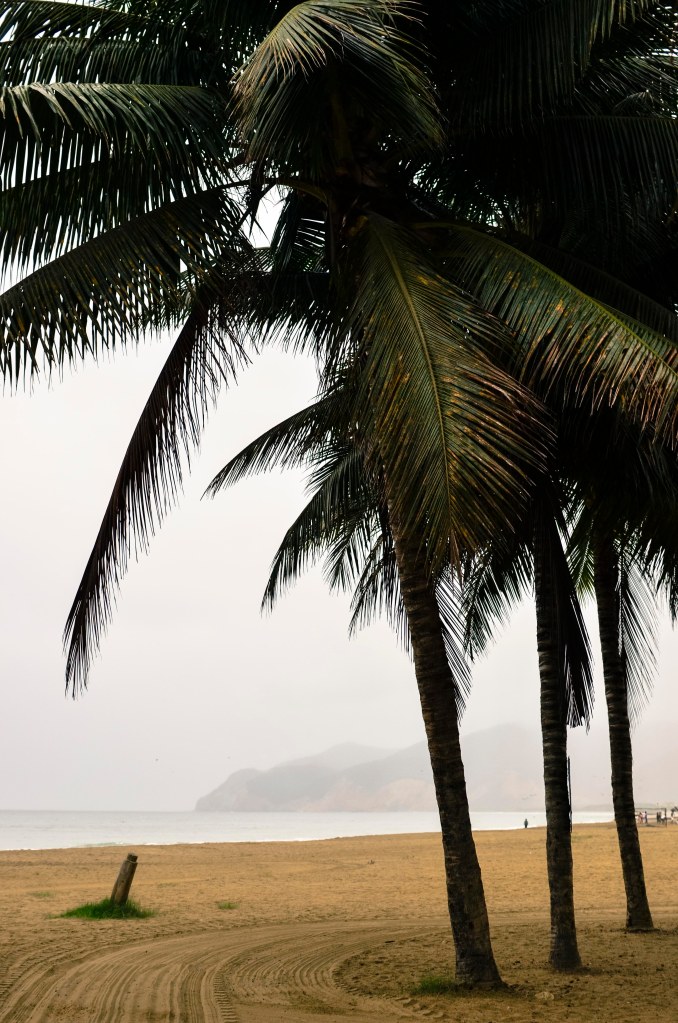
At second glance, there was a whole different scene going down the beach far away from where the sun worshipers would presumably hang. The dozens of wooden boats pulled up on shore just above the high tide line attracted us like bugs to a high powered night lantern. On the way over to check out the scene we came upon some small kids practicing their goal kicks on a sandy court, complete with tattered nets & ancient goal posts. After watching the impromptu soccer match we started meandering in the sea of parked boats on the beach. Wooden vessels of different shapes & sizes were laying silently on the sand, presumably after already spent the day on the ocean and already cashed in on the days haul. A few guys saw me snapping pictures and wanted to show me their prized catches. They held up a few of their living trophies and threw down some tough guy poses & big toothy grins. We saw a few other fishing boats come in, quickly unloading their work into a small pickup truck loaded with ice and ready for delivery. After we were done playing photographers, we walked back towards the beach came upon a small bird hanging out on the shore that had bright blue feet. It took a moment to realize we had stumbled upon our first Blue Footed Booby. I had forgot how close we were to the Galopagos, so it was pretty exciting to see this beautiful creature just hanging out in the sand right in front of our toes. The garbage scattered all along the beach just beyond the bird was disheartening admittedly, but seeing this wild animal for the first time still felt special.


After poking around town a little we bumped into a guy named Wiston Churchill. That’s right, Wiston Churchill. I’m pretty sure he picked the moniker as a gimmick to have instant name recognition, and if he did he forgot an “n” in it. Regardless, Wiston was a super nice dude that ran an eco-tourism business to show off the ecologically rich environment Puerto Lopez has at it’s fingertips. One of the main drivers of this business was chasing whales, going fishing, and swimming in some shallow nearby reefs. He was enthusiastic to tell us about how travelers loved his little business and even had them note their experiences in a book he kept at his storefront. He flipped through the worn out ledger to show us a bunch of reviews written in many different languages, probably a persuasion technique so he could show anyone on the fence how much fun other visitors had. It was kind of like online reviews without the internet, which was clever on his part. We flipped through the weathered pages and read some accounts of a fun day out on the boat enjoying the activities he described. Wiston admitted that we were probably not going to see any whales because they began their northern migration a few weeks earlier. A natural businessman through and through, he effortlessly pitched us a day of fishing & swimming for about $20 a head, with his promise of procuring a boat and a captain. We obliged of course, or else I wouldn’t be writing about this.


The next day we ate breakfast, put on our swimming attire, and made our way over to Wiston’s place. When we showed up he sent us on our way with his son, his cousin, and his cousin’s son on his boat. We were hoping Wiston would join but it seems like he wasn’t too interested in going fishing for the day. We went back to the launch where all the fisherman were the previous day, pushed his boat into the water, and set off. There were hundreds of pelicans, frigatebirds, and albatrosses flying around the boats searching for scraps. The grey sky was alive with these winged beasts flying in every direction as we slowly idled out of the bay. The cliffs that surrounded the beach were steep & mostly vertical walls of solid earth. Our captain pointed out that these cliffs were actually covered with Blue & Red Footed Boobies and took us closer to have a look. When we focused our eyes we could clearly see the dozens of birds hanging onto little sections of ledge that provided footing. Once out of the bay, our captain opened the engine up and we headed straight for a small island. This was where the tour usually stops to let the people take a swim in the shallow, turquoise water. We weren’t really super excited about swimming since it wasn’t particularly hot that day and the water was a bit on the cool side, but our captain insisted we swim since it was part of the package. We took some goggles out and looked under water for a while before hopping back on to go do some fishing.


We motored over to an area nearby some large commercial fishing vessels before cutting the motor. It didn’t seem like the best place to fish, but I assumed our captain knew this was where we’d catch some chow. Small chunks of wood were distributed that had fishing line wound around the middle a few dozen times with one hook & a few sizable sinkers. I fished a lot when I was a kid but had never tried my hand at fishing without a rod so I was pretty thrilled to try it out. Small pieces of bait consisting of small fish were doled out and on we went. Keeping true to the magic of fishing, nothing was caught after 10 – 15 minutes of waiting. The anticipation and excitement definitely cooled off after the initial rush of dropping lines. Our guide noticed the energy was low and decided to move to another spot nearby. Wiston’s son, who was about 3 or 4 years old, eventually pulled the first fish out of the water. He shrieked with excitement as it was taken up onto the boat and added odd oinking noises, mimicking the sounds the puffer fish was making. We clapped and laughed about the whole ordeal and put our lines back in the water eager to see who would come up with something next. Elissa brought in fish #2, which was a large puffer that had a very unique camouflage pattern on it’s back worthy of a picture of course. Our captain cupped it in his hands in order to show us how it blows itself up to appear larger & more ominous for predators. Before long, we were pulling up fish left & right! We must have stumbled upon a sizeable school and the adrenaline rush perpetuated with each fish on the line. Some were tossed back, the most edible ones were kept on the boat with us for the next part of our trip.


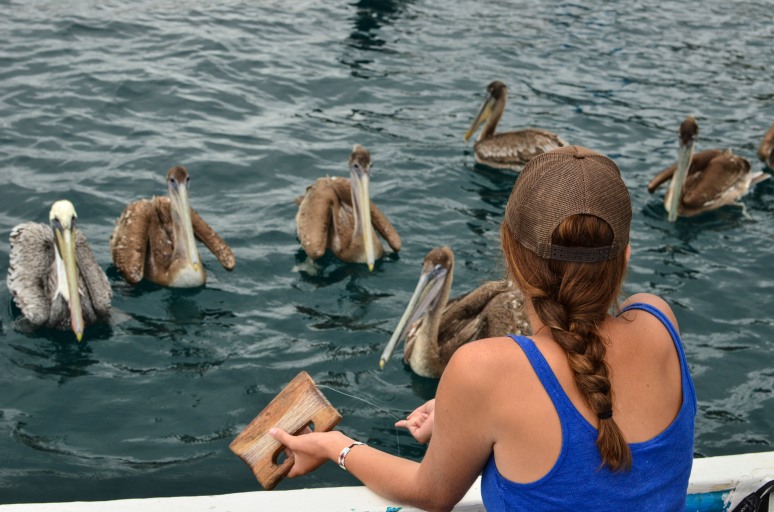
After we had used up all our bait, we started back towards Puerto Lopez with a bounty of freshly caught fish. Our captain took out a large bowl, a cutting board, onions, tomatoes, & limes and laid them on a seat while his 8 year old son was at the helm manning our vessel. I took a bunch of funny pictures of the little guy driving the boat who couldn’t have been more proud of himself and his newly minted responsibilities. His father diced up the fish, mixed the ingredients together, and squirted fresh lime juice over all of our freshly caught lunch. A few minutes later we cut the engine and enjoyed our own ceviche buffet. The company was just right, and the experience was definitely worth writing about.


After getting back on land we thanked our guides for the adventure and made a plan to catch Wiston to thank him before we left town. The experience, while definitely not unique by it’s existence, seemed to have played out as it was supposed to in our own unique way. Much of our trip seemed to be following the definitions that we were manifesting, focusing on the simple pleasures of what it means to experience a new area.

Don’t go to Salinas de Guaranda. You might not leave.

Bus rides between destinations in the Andes carry an almost certain guarantee to have some of the most dramatic landscapes you’ll ever see. After leaving Riobamba we enjoyed another long encounter with Chimborazo, specifically the southern face of the dormant volcano. I could easily get swept up into a myriad of intricate details about how stunning the ride was, but I think I delved into my short lived love affair with her enough in the last entry. That being said, the hour or so we drove closer into the reserve & towards the mountain was pure magic. Much like the last bus ride most passengers were local folks who were mainly sleeping while we were drooling on our windows. It was serendipitous that we were assigned seats on the right hand side of the bus by the ayudante in the bus depot because we were front and center for the entire show, watching the clouds play hide & seek with the enormous sleeping giant. Eventually we looped around and began pulling away from the mighty mountain until it disappeared out of our sight and out of our lives. The wild landscape slowly disappeared & we found ourselves in a small town where we would wait for our next mode of transportation to pick us up in a dusty little plaza.


We knew we were going into a really small, really sleepy village so we went around the small city a little bit to stock up on necessary staples of granola, bananas, and other various fruits & snacks. Experiences had shown us in the past that items will often be scarce in more remote habitats. Honestly, I couldn’t really go anywhere without a healthy stock of bananas at this point in the trip. I had developed both a physical & psychological attachment towards the damn fruit, and the fact that they were so ubiquitous in these countries only added fuel to the fire. Pound for pound, they were my go to snack for about 10 months, an addiction that still carries on to this day. After finding a dozen or so bananas we waited at a small plaza in a round about for a collectivo that was supposed to make the loop to Salinas.

A small pick up truck affixed with a sturdy open metal frame on it’s bed and a neon sticker reading “Salinas” pulled up curbside in the plaza and onto the back we went. At first it was just us on the back of a pickup truck rolling through town. But as we moved along we seemed to stop every so often to let another person or two hop on. After 7 or so stops the truck bed was noticeably more dense with bodies, which made our large backpacks now seem excessive since they were taking up a shrinking portion of precious real estate. Small families, pets, live poultry, farmers, and even a woman nursing a baby was the cast and crew for the ride. We were all standing upright in a breathing-room-only bed of a pickup truck heading into the mountains ahead. Everyone was in good spirits as we meandered up a windy road through a valley. A small stream cut through the valley floor & followed us further into the hills & into the mountains, leading the way towards our destination.

We instantly knew that Salinas was the exact kind of medicine we were looking for. It was a small mountain town that was firmly planted in natural beauty, natural resources, and a naturally nurturing environment for nourishment to be procured. It was perfect in its simplicity. There was a tiny town center with a large open plaza surrounded by yellow and red colored houses and small rocky peaks in the near distance. We immediately noticed that something interesting was taking place as our truck came to a stop. At our drop off point there was a rag tag group of young kids using a soccer ball to play volley ball. They had a net set up and what appeared to be a regulation sized court. I couldn’t believe that this is the sport of choice these kids were playing in this setting. It was such a strange sight seeing the game that originated in New Springfield, Massachusetts over a 100 years ago all the way out in this little mountain town. On the sidelines there was a group of older men & women watching the kids play the sport while the day slowly crept onward.


Our lodging was dreamy to be perfectly blunt. Before arriving we did a little research & found that there was a small family run hostel that had a separate house kept for renting out rooms to visitors like ourselves. We trudged up a short brick road heading out of town and followed a few signs to the hospedaje. We struck a deal for a few nights stay with the owner who was naturally on site and waiting for us to arrive. The room was beautifully basic and authentically rustic. There was a wood burning fireplace which proved extremely effective in the chilly high elevation nights, and a small pile of wood placed outside of our door that would be replenished daily. Our cozy cabin was perched on a small flat area on a hillside overlooking the micro-town, complete with a ladder that gave us access to the roof where we could wash our clothes & let them air dry in fresh, crisp air.

Salinas had a mantra that it adopted & ingrained into the fabric of it’s society that was a refreshing perspective to see working first hand. About 40 years back, a priest named Padre Antonio Polo arrived from Italy and became integrated into the scene at Salinas. He shared a vision that was for the greater good of the people, leading by example & putting community first over individual desires. This kind of approach has created a socioeconomic society that carries itself upwards as a whole rather than the goals of capitalism of modern societies. Taken straight from the tourism brochure, Salinas de Guaranda, Pueblo de Economía Solidaria, Salinas’s vision is described: “Year after year, Salinas has been and continues to be home to the values of community and solidarity, where people come before money, the poor come before the rich, the weak before the strong, the sick before the healthy, and the small before the big.” The crazy thing was this is exactly how the town seemed to operate and from what we saw it was working just like that.

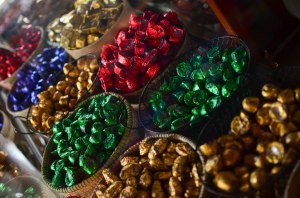
We decided to map out our day based on the natural features that Salinas had to offer & also taking a tour of the town’s cooperative businesses to see what the pulse of this community was all about. For our first stop we bee-lined it straight for the chocolate factory of course. This was probably one of the most established & sophisticated businesses set up at this town and was housed in a multi level building with lots of floor space. The main level was an entertaining hall with a large, expansive open room comprised of open space, long tables, and plenty of seating. Large windows gave the room a dramatic view of the hills & salt mines and was easy to imagine hosting a party here or handling large groups of tourists. Downstairs was a huge stainless steel kitchen area with workers fully suited & masked preparing & preparing the raw materials that go into the delicious chocolate treats they mass produce. They showed us a few rooms & equipment used before heading us back upstairs to the concession & chocolate stand area. Lots of high altitude chocolate treats were bought and consumed on the spot.

Next on our little self guided tour was the salt works. We walked down a path adjacent to the chocolate factory & went down a long flight of outdoor stairs towards the large chunk of exposed bedrock. The face of the cliff had interesting formations that kind of resembled a huge mound of melted ice cream. Since we didn’t join a tour group of any sorts, we were kind of exploring & not really sure what exactly was being done in these pools of salty, mineral rich water. It appeared that the water was being evaporated in large, flat areas & salt would be collected from the pools. We read that this salt was still being made as part of the artisanal economy from these mines, but I also I know from previous areas that had similar environmental conditions that this mineral rich water was probably good for healing purposes as well. We played with some salty mud, snapped a few pictures, and kept moving along.


After the salt mines we made our way towards the weaving co-op. This one was especially of interest to Elissa, for she had been waiting to find a good place to purchase some warmer clothing & gear and the idea of putting money directly into the hands that the goods was an idea very appealing to us. When we found the co-op we were greeted by a woman with a big, warm smile who let us explore the shop and explore at our leisure. The back room was filled with raw alpaca & wool spools in a wide variety of colors, old sewing machines, and a few women creating pieces in their studio. They were very friendly and we immediately got swept up into conversations, laughter, and smiles. Elissa’s mom has a deep affection for knitting, so I made sure I took a bunch of images for her to see (I know you’re reading this right now C!). I was particularly fascinated with hand portraits for an on-going series I have, and they were happy to let me snap away. It was a pretty intimate moment & the openness & charm of the Latino culture once again showed us that the world is a good place full of good people. We didn’t walk out of the coop without buying sweaters that we knew were made right in that little shop in town by honest hands & genuine smiles.


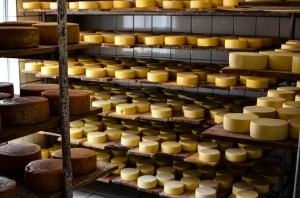
On to the cheese. This town had tons of fresh cheese going on, which was more than fine by me. How cheese production came into play was another fascinating story of a foreign visitor & his influence on the natural beauty & resources Salinas had to offer. A Swiss fellow named Jose Dubach taught the town locals how to produce artisanal style cheeses in tradition with techniques from his country. At first, cheese production was limited in scale & was a bit of a learning process, but eventually through networks of families, farms, & distribution methods the cheese business took off & became a backbone of the local economy of Salinas. Today around 120 workers tend to around 70 rural cheese plants, which also helps support over 1200 farming families in the area. It was one of the first cooperative successes of Salinas & became the example that the community used to create it’s flourishing & sustaining economy. The production in the factory building was very streamlined from start to finish and it was no wonder why so much fresh cheese was produced by this little town. The tour showed us how all the milk collected & brought into town on horseback, donkeys, & alpacas would go from a warm, fresh liquid into a block of delectable cheese.



Another business we were particularly interested in was the soccer ball factory. That’s right, somewhere in this post stamp sized village was a little building that made soccer balls which would eventually be played with on grassy fields & concrete plazas throughout the country. When we found the building there wasn’t really any signage indicating what to do or where to enter, just a single door in the middle of the building & stairs leading up to a 2nd floor. I knocked on the lower level door with no luck, so I tried knocking on the door upstairs. I recall a door opening & getting a very puzzled look from the person who opened the door. I think we probably caught them a little off guard, as nobody seemed to be working that day and the organized tour group for the day had probably already passed through. A pregnant woman came out with some of her kids and opened up the factory to give us a full tour. We went upstairs into a room with a bunch of stations that each had a small table & work space area for each step of the process. The machines looked like old tools I would find in my dads garage, but each modified for the specific task it was performing. We walked through the assembly process step by step in a few minutes and asked a bunch of questions, snapped a few photos. We decided that we would spend some of the Penny Karma money we had been getting through the donation page for buying soccer balls directly from the source. The idea was that we would find the right place to give these balls out when the opportunity arose as part of a gift back to the communities we were exploring. It would be a way of us giving back to the places that were giving us so much. So we bought a few small soccer balls & a few regular sized ones & let the family get back on with their day.


By the end of our tour, we had collected a bunch of different items from multiple different cooperative businesses. Our collection consisted of soccer balls, sweaters, soap, different types of cheeses, cured sausages, chocolate, fresh bread, crackers, jam, apples, & a bottle of wine. We made a homemade Salinas supper in front of a warm fire and couldn’t have been more pleased with the outcome. It was a real & genuine feeling knowing that our meal came from the land around us. I’ll remember that cozy meal by the fireplace place forever.


After devouring Salinas in a slow & savory way we chose to spend a day going on a hike outside of town & into the Páramo. There was a beautiful little hiking path that was just beyond some houses that took us past a town water supply station & into a valley. Steep, spear shaped pillars of rock adorned the cliffs on either side with the occasional cave at the base. The valley became increasingly narrow as we moved along, converging in on itself. The path eventually split into 2 directions, and we chose a small path to the left. It carried us up a very steep trail, occasionally riddled with pines that were cut down by what was probably a logging operation. After a particularly steep jaunt the treeline disappeared & we were looking into a wide open field full of wild hay. The landscape was vast, hilly, & felt larger than life in size & stature. We hiked upwards through the golden straw, observing the wide open fields around us. We made our way towards a small house built into the hillside & spotted a bunch of small clearings surrounding it. We found about a dozen or so sheep by the small abode, clearing the hay by eating it down to the earth in the radius of their rope/stake situation.
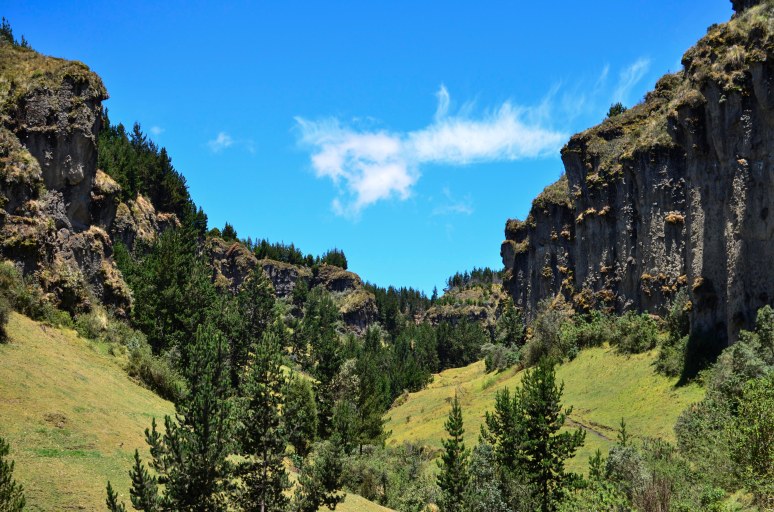


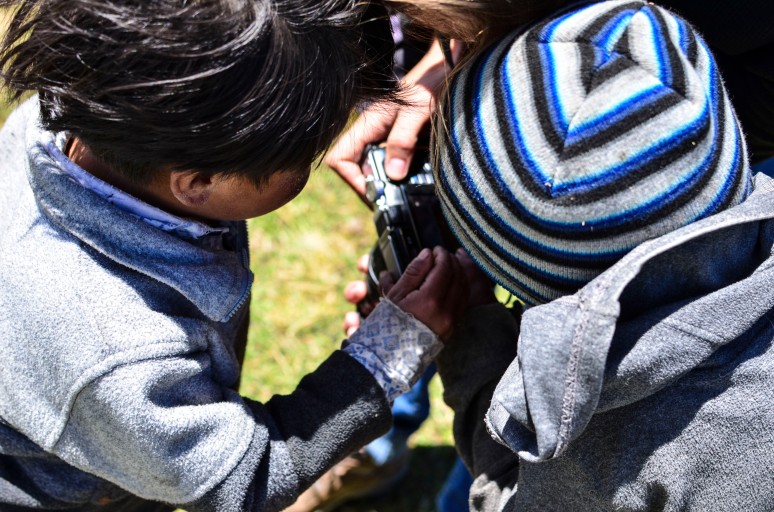
Aside from a few sheep, it seemed like we were the only living beings around up in those hills. The light was as clear as I’ve ever seen it. The wind was blowing steady, creating golden waves in the hay that pulsated in an endless break across the vast sloped terrain. We trekked down to a fence line and crossed a small stream into a field that was devoid of tall hay and had interesting rock outcrops that had grabbed my attention. As we approached the small cliffs jutting out of the ground we kept finding trash, both scattered around and collected in random nooks. We walked through a miniature valley and came across two young boys, probably around 4 & 5 years of age at their tiny little homestead & farm. Their dog approached us and was being loud and aggressive, but the boys quickly noticed we were not cool with it’s demeanor towards us. The older boy took either a rock or some round object and whipped it at the dog, striking it in the back while cursing at it. The dog stopped barking at as and took off back towards the house, and I couldn’t help but get a chuckle out of the whole ordeal. They were very surprised to see us wandering around and we became friends pretty quickly with the basic Spanish they were speaking with us. They were very curious about my camera and our phones, so we showed them how to take pictures using both. I was trying to imagine living in this setting as children, and how their days compared to my own as a kid. Their parents must have been out doing work for the day, as it was just the kids, their dogs, and their alpacas. Their house was very small & basic, with no signs of electricity & a wood burning wood stove for cooking & warm seemed to be it’s main utility. After playing with the kids for a little while longer, we said adios & walked back to town.


Salinas hadn’t let us go without keeping a piece of our souls with it. We had so many stories to tell about this tiny, close-knit village and couldn’t help but feel that we had struck gold going and seeing it for ourselves. It’s rare to find a place that has seemed to have kept it’s personality in check while dealing with the influx of tourism. The mantra that the community has established & implemented has certainly seemed to have reached the goal that it set out to capture. The slow moving charm and preservation of cultural heritage also doesn’t hurt this post-card perfect town’s image either. Salinas taught me a lot of simple life lessons that have been resonating in my mind as of late, and I don’t mind taking the ride again on that small pick up truck bouncing our way upwards towards our town in the mountains.

Stopover in Riobamba to Ride a Phantom Train

Author’s note:
It’s been a solid 6 1/2 months since my last update on this story. I can’t come up with anything other than procrastination & prioritization as being the 2 key elements keeping me from putting the pen to the paper and stepping back into the ethereal experience that I so longingly crave to dwell within. Life in a city can and will often come at you just a hair under the actual speed of light, making it extraordinarily tough to sit back, take a deep breath of air, and watch the memories come flooding back into your soul. Too much time passing by can make the synapses a little dusty, and almost too hard to reach. I consider myself lucky that something, somewhere within my being is forged with an infatuation for photography. This feeling drove me to use my camera every day while we were constantly wandering through new environments. Images seem to have a magical power that can almost preserve the senses that you were receiving in the moment when your finger pushed the button to open the aperture. A great photograph can pass those feelings along to the viewer, which is a really cool gift to spread around. When I look at the image above I see a younger, more relaxed version of myself taking all the time needed to be living completely in the present moment. That’s a feeling that I am doing my best to seek and hold onto, and I look forward to the days when I’m consumed by them. Travel can do that to a guy.
How can an image bring about a sound that you can recognize? A smell that you can describe down to the most intricate details? How can a photograph make you feel the cool rain that came down in a place you’ve never set foot in on a day you were never there for? How can a picture show you love?
I’m glad I took my camera out when I probably would have been more content leaving it in it’s bag. At times it felt too heavy to pick up, like I was just going through the motions because I felt I was obligated to do so. But something would always come into focus that would instinctively send my hand into my camera bag. Some of the best images I’ve ever captured were in some of the simplest, shortest lived moments in time. The ones that weren’t polished or prepared for at all. There was almost never a set up and almost never a vision that I wanted to create. There were real moments that couldn’t be defined by anyone outside of the actual experience that was taking place. Those were the moments that I sought to capture and to pass along. Riobamba wasn’t a very exciting leg of our journey. It certainly lacked the adventure & gravitas that adhered to our other layovers, but when I look back at my images I can easily slip right back in time, tip-toeing in stream of reminiscence of a past when I was right there, living and breathing in that city. And I think that this kind of time travel is a pretty cool trick I need to take advantage of and use more frequently. I feel like lately I haven’t been giving it enough attention, like I’ve been taking it for granted.
Long story short: You get what you put into life, and I need to start putting more into my writing & photography. I’m making a promise to myself to not let this much time go by before revisiting some of the best experiences of my life.
-Dr.

The ride from Baños to Riobamba is a memory that has secured a permanent parcel of real estate in my brain. The jungle-like terrain of Baños disappeared from our field of vision and was quickly replaced by rolling green hills & dark, bold clouds occasionally gutted by the luminous sunshine in the crisp high mountain air. The occasional farm would poke it’s head out from the earth long enough us to get a glance before it disappeared from our lives forever. At that moment we were approaching month 9 of our journey and we had been intimately intertwined with mountainous landscapes for quite some time. They had become somewhat normalized as part of our surroundings, which made it more of an effort to be impressed by the endless supply of beautiful peaks & valleys wherever we looked. We had been getting a little mountained out, which I can assure you is a real possibility during lengthy encounters with the sheer volume of South American ranges. This particular day broke us away from that feeling. I forget who noticed it first, but one pair of our eyes focused on something that did not fit in with the rest of the picture. The enormous white peak of Chimborazo was suddenly there, sugar coated in snow and slightly shrouded with clouds. It rose almost straight up out of the ground and and stood still as the landscape in the foreground shifted at a constantly at a tremendous pace. I watched the snow blowing in slow motion off it’s peaks, blending into the fluffy white clouds passing by. I was awestruck. In comparison the larger than life chunk of earth was stoically biding it’s time while we all superfluously raced through life from one place to the next. While the land immediately in front of us accelerated past our eyes the eastern face of the enormous volcano sat forever still, far off in the distance with no obligations to be had.


Guidebooks & research can be a beautiful way to help you navigate through the uncertain paths that are waiting ahead of you when you are traveling anywhere you haven’t been before. An outdated book of ours was telling us that a unique experience was to be had high up in the Andean mountains from a small city named Riobamba. Every bit of information we had leaving Baños told us that an old freight train made it’s way daily from Riobamba to Guayaquil, but would pass through an insanely steep traverse up the side of a mountain. This railroad was built back between 1899 & 1908 and proved that crazy & smart could work hand in hand. It was a big leap in transportation efforts between the mountains & coastal port of Guayaquil. This railroad was a pipeline that linked small villages & rural areas with cities & the supplies they tend to have. For regular commuters & for tourists that wanted to get a vintage experience under their belt, the train offered daily departures to a town nearby allowing passengers the option of getting a seat inside or taking the journey while riding on the roof. No seats, just sitting on top of the train with everyone else to get from A to B. With unobstructed views of the valleys & the steep mountain coined “El Nariz del Diablo” (The Devil’s Nose), this trip seemed to have it all. To get the train up this steep terrain engineers built tracks in a series of zig zags that would allow the train to use both forward & reverse to climb up the mountain. The train remained fully operational until a portion of it was destroyed in the El Niño related weather 89 years later. A smaller portion of the track remained open until just before we showed up with dusty boots and tired backs.

The minute we arrived in town we wandered over to the train station to buy the ticket & take the ride on the old freighter we’d been dreaming about. We were led through an old depot station into a room with a few desks & employees stationed at desks behind computers. Once we asked about the train we found out that our guidebooks held some information that was outdated and was literally the information that led us to this town. Our bubble had burst when we heard that the train ride had been modernized in a way that will generate more income & was now used solely to promote tourism. New trains were decked out with plush seating, floor to ceiling windows, live entertainment, & food. This in turn came with a sizable price hike, and not at all what we had hoped for. We left the depot a little flustered, but we couldn’t let a minor setback like that hinder our stay in town. Still having all our gear, we hopped in a cab with directions to a nice sounding hostel a decent distance from the center of town. When we showed up, we found out that it was a lot more expensive than our guidebook had conveyed (we had been noticing an upwards trend in pricing for a while at this point), and ultimately way over the budget we wanted to spend considering the circumstances. We marched back towards the center of town, pretty exhausted at that point, and stumbled upon a relic from the past that was still open for business.

Nestled on a fairly busy corner, surrounded by a hodge-podge of privately owned variety stores, sat a hotel that looked as if it did 20 or 30 years ago in an effortlessly beautiful fashion. We walked through the lobby and into a small welcoming room complete with a high-top Formica counter adorned with a thin metal aluminum bevel on the edge. Nobody was waiting at the desk area, which had a small bell to ring and nothing else. One tap of the bell later a man walked in from the doorway behind the desk & we began to talk numbers for a nights stay. We settled on a one bedroom on the top floor with shared community bathrooms. The man gave us our key, and led us up the concrete stairwell to the 4th floor. When we entered the foyer the room opened up and featured a community sitting area complete with a dusty radio, television, a few chairs, a love seat, and side table height vintage metal ashtray. The floor on the center of the room was 6 inch opaque glass blocks that allowed the light from the foyer below, which added an unusually pleasing light to the area. The man took us over to our room, we unlocked the door, and he waited for our approval before disappearing downstairs. The bedroom was extremely basic. There was a very old bed with a very old mattress covered with very old bedding and topped with very old pillows. There was a tall mirror above a wooden desk, as well as a small TV that was affixed to the wall. We had a small balcony that let in the most beautiful afternoon light through the tired, old windows. I was digging just about every detail of this building and knew it would do us justice for a night while we regrouped & made plans to head out the next day.


After catching our breath & relaxing for a little bit, we decided to head out & see what the town had going on for dining & general entertainment. We found ourselves magnetically drawn to the tiny shops in the neighborhood that had their own niche inventories & themes. I remember one in particular that was selling new & used watches from display cases that looked as old as the cobbles in the streets. I almost convinced myself that I should buy a watch & figured it wouldn’t hurt to sleep on it till the morning. When hunger eventually grabbed our attention we sought out a steakhouse we had either read about or were referred to by travelers. It felt like a good idea to splurge on a meal given the train idea had derailed. On the way we noticed the neighborhood we were walking into was becoming more trendy by the block, with upscale looking purveyors & businesses amassing the further we went. We eventually found the steakhouse and immediately saw that it’s fare was well beyond what we could justify for a supper. We decided that the next runner up was our #1 go-to whenever it was an option, comida chifa. And there just so happened to be a decent Chinese restaurant a few blocks away from our hotel. Life was looking good. We ordered up a few solid dishes & ate on a plastic table with a plastic tablecloth in a room full of mirrors. Bliss.

After eating we found a pretty cool bar that served signature cocktails & had a great snack menu. We each ordered a unique, mixed drink & relaxed in an urban chic setting. It was a nice change of routine for us and it certainly wasn’t one of our staples. We didn’t stay for a 2nd round, instead we wandered around the large plaza for a while & reveled in a brief pause in our itinerary. We didn’t have anything to conquer or any crazy preparations to figure out for out next leg, we just had a free day in a place we hadn’t expected to enjoy as much as we did. We left our antique hotel the following morning at a casual pace and hopped on another old bus headed straight towards the mountains ahead.

Baños, Ecuador: Hot Springs, Waterfalls, and Taffy

Departing from the bubble of a modern, busy city never really felt like a barrier that was hard to overcome. The act of leaving is also substantially easier when your eyes are completely enamored with the rising, rugged landscape ahead of you. Beyond all of the twists and turns of the mountain roads that cut through sheltered valleys & raw ridges was a different world, one that was highly polarized from the existence we just left behind. Our goal was simple; get to Baños, relax, eat well, and get revived. The echoing banter we seemed to encounter in every travel conversation spoke highly of this area, describing it as a peaceful Andes mountain town overshadowed by lush, green cliffs and a powerful river cutting down through the valley. Baños is known as the gateway to the Amazon because it’s the largest city in the mountains before reaching the jungles of the Amazon Basin. The town itself has over 50 waterfalls, and there didn’t seem to be any shortage of green vegetation in any direction. There was also plenty of chatter about the natural hot springs & healing pools supplied by geothermal activity. For all of these reasons we were itching to get our feet on the ground and seek some quiet enjoyment in the small ciudad and see what the surrounding lands held for visitors with eager eyes.


We arrived in an old bus depot in Baños in the late afternoon, and sought out our digs for the night. We began walking down a narrow street that was lined with stores and life milling about. I remember being caught off-guard seeing a man hand pulling taffy, a treat we hadn’t encountered yet in our travels and one familiar to our childhood in the states. I started scanning around to see if this was just an anomaly and noticed that several other shops close by had the same product for sale, and guys pulling taffy in the same fashion. Each had a large hook mounted onto the wall shared with the next store over that was used to pull and stretch the taffy. The person making the taffy would sling a heavy piece of the sugary rope over the hook and pull it until it softened up. We watched with curious eyes for a while before carrying onward to find a place to lay our gear down for the evening. Research later confirmed that Baños is known for it’s taffy & hand carved wooden parrots, oddly enough.


It appeared that expats had discovered this area long before we arrived in town, most noted by the wide selection of food from around the world. We passed by several places with menus we would have relished on, but was a little out of our reach on the budget scale. Thai food for two would have been savored until it completely disappeared from our plates, but would have cost us a few nights rest in a modest hostel. As luck or fate would have it, we stumbled upon a tiny little family owned restaurant that boasted the best friend chicken & papas in Baños, and naturally we caved in. Our meal was prepared by an 80 year old woman, who’s secret recipe was the glorious legacy of this 8 table restaurant. She proudly told us of her special oil pressure cooker that flash cooks the chicken so that each bite is savory, crunchy, and full of flavor. I could have lived out the days of my life eating that chicken and listening to that wise old woman’s cackle, which was complimented by the hundreds of wrinkle lines her face made when she laughed.


After checking out a few sleeping options in town, we settled on one that seemed to have a decent kitchen and some outdoor space. A quality kitchen area rated high on our priority list, and outdoor space was essential for getting away from the bunk bed dorm room/cave, and to preserve sanity during downtime. I developed a keen ability to tune out my immediate surroundings and I did a lot of my writing after breakfast and before bed, but almost never in bed. Rarely could I find inspiration in a dark dorm room with strangers sleeping or milling about. An odd feature this hostel had was a Turkish bath on the roof, which didn’t seem to have any instructions or indication of how it operated. It didn’t matter much to us, because our primary goal for Baños was to get some relaxation time in the natural hot springs.


After breakfast we set out to find the hot springs on the edge of town, eager with anticipation. Right outside of the springs were public laundry washing stations comprised of concrete irrigation channels that fed shallow tubs for workspace. These channels were strategically fed by the run off from the waterfalls cascading down from the side of the near vertical cliff adjacent to the baths. The water coming off the falls was extremely refreshing, and formed a cool mist that hugged the base of the mountain. The entrance & building for the hot springs was beautifully classic in it’s appearance. I’d place a time date stamp on late 70’s-early 80’s construction and hand painted signage. After paying our fees we changed into our beach attire, took a go at the outdoor coed showers, and slinked into the hot, yellowish thermal baths. The springs were fed by mineral rich, geothermically heated water captured into a large communal pool and several different hot tubs of varying temperatures. The pool was fed by several pipes that were carrying the naturally heated water, so your desired temperature could be somewhat controlled by your position. A glance around the pool revealed we were one of the only tourists there and the cast of characters was some solid people watching material, complimented by a gorgeous 200+ foot waterfall in the near distance. Some people came to swim laps while others came to chat with their friends as part of their morning ritual. Everyone was extremely friendly to each other, which passed along the good vibes to start the day.


Opposite the large communal thermal pool was a shallow cooling pool, fed by bone chilling water most likely collected from the waterfall. It’s easy to trick your brain the first time to get right into water that is the polar opposite of what you just became extremely relaxed in, but after that you’re on your own. The sensation of absolute cold hits you in a way that forces your body to contract, which in my case resulted in pulling the air out of my lungs in short, choppy releases. The best way to describe the feeling of your skin going from hot to cold in this fashion is to try to imagine diving into a pool of cold mouthwash. Every pore on your skin has a tingle and tries to dance itself out of your body, hovering only slightly off the surface in perpetuity. This experience makes the return back to the thermal baths irresistibly enjoyable, and does the exact opposite in reverse. However, this hot/cold therapy is part of the maximum health benefits of heated thermal springs, and I can attest it does make you feel like a new person.

After our spin at the hot baths, we wandered around town a bit more to see what else was going on. We heard from some travelers that there was a bridge jumping business near the bus station, and that sometime in the afternoon there were going to be some tourists trying it out. When we showed up to the bridge, sure enough there were some guys with a group of girls in the middle of the bridge fastening harnesses and giving out instructions. We took a walk down a path that seemed to go underneath the bridge, which was probably around 150 feet above the churning river below, to get a better vantage point of the jumpers. One by one we watched a few jumpers go, and snapped some pictures of them swinging under the steel bridge. I grabbed a few good images and figured I’d walk up and ask if they wanted me to email them to them for souvenirs. As we spoke with a few of the girls and guys, we turned around to talk with the jumper I just shot images of and to our surprise it was a very familiar face! Coincidentally, one of the jumpers I took pictures of was a travel buddy named Ilse, a dutch girl we last saw in Colombia when we parted ways near the border. Small world.


The next day we went back to the hot springs in the AM for some more heat therapy before setting off on a hike that led to a vista above the town. The trail was consistently steep all the way to the end, which afforded a gorgeous, sweeping view of the valley and city beneath us. Along the way there were small footpaths to private residencies, which from my understanding were only accessible by this long hike on a narrow trail. A nice jaunt back to town had us hungry for some quality food, which we found in the central mercado near the fried chicken spot we found our first night there. Inside the mercado were dozens of stalls selling vegetables, fresh fruits, and delicious smoothies. There was an assortment of items foreign to us that could be put into juicers or blenders which yielded fresh, tasty treats. I asked one of the stalls if I could watch them prepare some sort of doughy bite sized snack, and there were no objections. Everyone seemed to be very easy going, living life at their own pace tucked away in this mountain valley near the Amazon. Could be something in the water here.


On one of our last days in Baños we chose to hire some bikes, get out of town, and explore the statuesque valley below. We biked along the only road that led out of town along the edge of the river, hugging the skinny shoulder on a long, gentle decline. Little gatherings of houses and streets would occasionally come and go as we whizzed by on inflated rubber tires, enjoying all the primitive and simple pleasures of the ride. Occasionally there would be pull off along the gorge to showcase an impressive waterfall and panoramic views. There was usually some sort of business catering to adventure tourism demand at these stops, typically ranging from paying money to climb up a tall tower for a better view, zip lining along the gorge, zip lining across the gorge, bridge jumping above the gorge, paying for a gondola ride across the gorge, or restaurants with a view of the gorge. The road had been cut through portions of the tall, solid wedges of rock, forming a tunnel out the other side. Usually a few hundred feet before the tunnel entrance a small bike lane would veer off to the side, hugging the contours of the valley walls. These side paths seemed like the used to be the original road before lots of traffic came to the region, and were comprised of mostly hand placed brick and concrete walls. This zig-zaggy path led us to all sorts of surprises, and some beautiful curves that would take us underneath chunks of cantilevered bedrock dripping with groundwater and hanging plants. We took it all in and kept soaking in the views as we went further and further down in elevation along chocolate colored river below.


Eventually we came through a town and the path diverted us onto a series of bridges that went over crystal clear water of what must have been a rogue off-shoot of the roaring river we had been following all day. The stream had a gentle, zen-like babble as it made its way over rocks and around large cobbles protruding out of the surface and basking in the sun. The sleepy little village seemed to be a great place to stop, explore, and enjoy the mountainous setting we stumbled upon. The bike bath we were on came to another tunnel going through yet another mountain ridge, with the entrance disappearing into a void of black nothingness. Not wanting to press on further away from Baños, we followed the stream to see where a little path that hugged it’s banks led to. Houses dotted the worn out road here and there along the way, and I couldn’t help but let my imagination wander into what life would be like living in this quiet, peaceful area somewhere between the Pacific Coast and the Amazon. We found a spot to rest along the banks near an old cargo pulley system that was probably used as the only means to get to the other side of the stream during wetter parts of the year when the river ran high.


We chose to thumb a ride on the side of the road, looking for any truck that had space for us to get back up to Baños. The entire ride back to town was uphill, which, while not impossible, was definitely not at the top of our list of things to do at the end of the day. We flagged down some nice driver with a large empty truck, tossed our bikes up in the back, and climbed aboard. The ride back was very refreshing, and we got to ride through the cool, dark tunnels we couldn’t bike through for obvious reasons. When we got back to Banos, we biked around a little more before heading back to the rental shop to drop off our rides. We were planning on setting off the next day to dig a little deeper into Ecuador’s gut, and were excited to see what new experiences were on the horizon.

Quito, Ecuador!

On a well seasoned bus somewhere along a stretch of old highway south of Otavalo we crossed the equator. If there was signage along the road I definitely missed it, which would have been an easy oversight amongst the consistently beautiful scenery shifting endlessly through time. The buses in Ecuador all have a thousand stories to tell; they cruise along worn asphalt channels through the mountains every day of the week, carrying thousands of passengers to their destinations in all directions. I recall our bus that day was adorned with aged plush velvety curtains bleached from countless miles it spent cruising in the crisp high mountain air. We had a travel connection ahead of us in Quito that we met on our maiden night in Guadalajara, Mexico. At our first hostel we had met a very friendly, silver-tongued traveler named Juan Carlos. Juan had a larger than life kind of presence paired with an honest interest in engaging with anyone who wanted to talk. Juan spoke fluent English, which was quite necessary for us at the time. After sharing his general travel wisdom, destination tips, and Mexican cervezas he invited us to a free tour complete with a bed to crash on if we ever made it to Quito. As were were heading into Quito I kind of felt like we were walking backwards through time, landing right back into that first night arriving in Mexico. It was a good feeling to dwell in, seeing just how far we had come in the journey and how much we had learned since we first met Juan. These thoughts marinated in my head as we rolled into Quito, two weary travelers ready for a comfortable couch to sit on. Quito had a good public transportation system set up with buses and tram lines, so as soon as we got off the bus we jammed ourselves into a tightly packed subway car with travel gear in tow headed for Juan’s apartment. When we arrived we said hello to a friend we hadn’t seen since our very first moonrise in Mexico, who greeted us with a big warm smile.


With an elevation topping off around 9400 feet, Quito is officially the highest capital city in the world. At first glance, Quito seems like another sprawling, modernized city. Tall glass towers and condos stare off into the distance amongst older buildings that both look and feel their age. Quito is the only capital city in the world that has an active volcano (Pichincha) that still poses a potential threat to the citizens below. A few other eruptions in recent history from nearby volcanoes have deposited ash all over the city, but that is about the extent of the worst damage thus far. Some neighborhoods in Quito are extremely modern from the vantage point of a pedestrian. A steady stream of SUV’s and new cars are always in plain sight amongst huge mega walking malls, ultra modern public spaces, high end shops, retail, and restaurants. The modern areas of Quito felt very familiar, almost like being in an affluent city in the US, which to us doesn’t usually hold too much curb appeal as travelers. The equation for luxury seems to be simple, and it doesn’t typically resonate with our travel agenda. On the contrary, with a guide who knows and loves his city and what it has to offer, this setting can also be a refreshing change of pace from the dirt roads and rough travel we had been living in. Juan promised us a good time and to see some sights, so we were definitely game for that.


Juan took us out for a night of music and some dancing to show us the sights in Mariscal, which is known for it’s nightlife scene. This part of Quito also has a reputation for being a dangerous area for tourists, where petty theft and muggings are prevalent, especially during the wee hours of the night. The streets that evening were brimming with bar after club after bar around almost every corner in the neighborhood. The 20-30’s crowd dominated the population and were all donning their weekend’s best. Our clothes were pretty beat at this point, so we did our best to make my plaid shirt pop (same plaid shirt for 8 months of travel) and Elissa’s dancing boots shine (same boots for 8 months of travel). Juan took us into a club where he knew the bartenders and bouncers, so we got hooked up with some early PM shooters accompanied by loud music. One of his friends handed me a cowbell at one point, which was played flawlessly to every song that needed percussion of course. After checking out a few different venues, Juan ordered a bottle of vodka so we could make our own drinks (common practice in Quito) in a small bar that specialized 1990’s hip hop music videos. Needless to say, dancing ensued. Round off the end of the evening with a 24-hour burger joint, and you have the full picture of our night out.


Quito possesses what is arguably one of the best preserved historical city centers in the world. The old town was the part of Quito that we absolutely melted into. Every building in sight was full of intricate details along their facades enhanced with pastel colored palettes. The setting breathed history right into your mind, and you could almost feel the past hanging onto the walls of each old stoic building. Flat stones that were hand placed in the ground hundreds of years ago lined the plazas that were filled with historic sculptures made of stone and metal. The scene in every direction was a quiet feast for the eyes. It was like watching clips of a past world pan by with each passing step. A casual glance down any one of the long, narrow calles would stop me dead in my tracks while I tried to take in the grandeur of the blocks of buildings staring back at me. The image I have imbedded in my head is one made of perfect little balconies that fade away into the hilly horizon while passers-by carried on with their day.

The streets seem to be decorated with beautiful relics of the past accompanying their ancient counterparts. It was hard to find anywhere to look without being inundated with intriguing little details. It’s was also easy for your eyes to get tired in these types of situations, constantly scanning the surfaces of every foreign shape your eyes could focus on. There were wrought iron railings, foot bridges crossing over deep alleyways, and Spanish tiled roofed houses fading up the hillside in the distance. Unimaginably ornate churches with equally impressive wooden doors and seem to be scattered throughout the beautiful maze of the old streets. Calles and plazas were also public places of gathering for everyone to use and enjoy. We came across a group of a dozen or so people performing Capoeira while dozens more crowded around to watch and listen to the music. Street performers amassed crowds of hundreds in some plazas, while politically charged gatherings were dominating others.


Life all around us was moving at the same pace it would have had we not been there. Cities can give you that sense of being completely inconspicuous in plain sight because nobody seems to notice you’re falling in love with the scene in front of you. Along the side wall of an old church we came across a blind man playing guitar simultaneously with a maraca, which turned into one of my favorite portraits of our journey here. In one of the larger plazas, sitting on a bench next to me was a man getting his shoes shined up before heading into a neatly tucked side street. In almost every direction there was something to be learned and loved, which is a hard attribute to replicate. Walking through the canyon-like alleyways brought us to discover little restaurants, shops, and pubs all tucked away in a pedestrian only area. We got lost following our noses, ears, and eyes until our legs couldn’t stand to take it anymore, and we had to head back to Juan’s to retire. Being blissfully lost in a new place for me is usually a battle between my curiosity and my endurance, both of which became conditioned the more I saw.


On our last day in town, we met up with a college friend of Elissa’s who also happened to live in Quito. Diana took us out to have some really superb Italian food followed up by a treat at an incredibly ornate chocolate and desert store. She offered to help me try and locate some new boots, since my hiking boots were lifted on one of our last legs in Colombia. We went to a few stores before I found the exact same pair of boots that Elissa had, which were also the most economic option available (cute right?). Diana also brought us up to her condo in Quito, which was perched on top of a peak overlooking a gorgeous valley below.


Our friends were too kind to us, and they showed us a bit of Quito we may have never seen without them. Their hospitality was truly appreciated and is a part of our memory of this city. Quito’s old world charm combined with it’s capitalistic ambition has helped to create a modern day timepiece with the capability of oscillating between modern and historical counterparts.

2015 Has Some Big Shoes to Fill

New Year’s Day is both the beginning and the end of something in each and every one of our lives. A lot of people seem to relish in reflection on this day of the year, and rightfully so. It’s commonplace to keep on thoughts on the positive side of the fence, going through the superfluous nature of the highlights of the year and all the accomplishments that surfaced. This kind of review is a good way to look back through rose colored glasses, but I always tend to examine both sides of the coin with intent to see and feel the good, the bad, the ugly, and the beautiful details to see the whole picture. On the last day of the year, memories and images flash flood through my mind as if a gate that was holding back each and every moment suddenly bursts open into a sea of experiences in front of me. This act feels almost as if I’m trying to pause time and live in each moment, with intentions of capturing that feeling once more before letting the swell make it’s way back from where it came. This practice gives me a better perspective on time and the journey itself, which can be extremely hard to do in our fast paced social lives we’ve created for ourselves. Time is always winning the battle against our desire to slow it down, and too often we ride the wave without even glancing back to see what we’ve just come from and how we got there.


2014 started off with Elissa and I settling back on the East Coast after a 30 day train trip around the US. We spent over 7 days time on a train seeing the great American landscapes roll past the glass windows of our train while we waited to step foot in cities I’ve only heard about. The winter felt extremely long upon our return, which is typically a byproduct of travel. 2014 became my most successful year from a career standpoint. I more than surpassed the goal I set for myself at the beginning of the year and am very proud of where I took myself. I felt that I learned how to create a better balance between my work and personal life, which can be extremely challenging in my field. The rapid pulse of Boston real estate can siphon your free time completely if you let it, which admittedly I have fell victim to more than I like to admit. Society makes it easy to let your career define who you are, but in my opinion self awareness can more often than not be found outside of your 9-5 and is a true reflection of what you are capable of as a human during your time on this planet. Bliss can be found by falling back into the moments that mean the most to me, most of which tend to be simple, fleeting, and easily missed if you are not standing still.


I’m glad that my soul requires me to capture images and moments in time without any other end goal in sight. Photography is an invaluable tool to me and a huge part of my life. Not only can it capture a moment in time, but you can put feelings into the scene in front of you from behind the lens too. If you put thought and your heart into the scene or image you are creating you can make something that has real weight to it, which in turn can provoke thought and emotions from the viewer. Looking back through my catalog of images I can see a story in the making years down the road about who I am today and what I was doing during this period in life. I’m not sure this story will end up anywhere but in the ears of those willing to listen, and that’s just fine by me.


2014 was filled with travel. We had both big and mini adventures exploring our surroundings with the time we had to get away and play. 2014 led us back out to the West Coast to get a glimpse of springtime at Joshua Tree in the Mojave Desert, explore the scenic coastline along the PCH, and help officiate the marriage of one of my best friends to his other half. 2014 made me an uncle and my brother a dad. Holding 7 day old little Evelyn in my arms was something that I cannot describe well enough with words to capture the gravity of the experience. 2014 took me and my partner in crime kayaking and exploring almost all of the Bay Harbor Islands while daydreaming about shacking up in any of the old New England cottages we stumbled upon. We also made time to savor the off season in Martha’s Vineyard, visit Acadia National Park and Peak’s Island in Maine, finally go camping in Upstate NY, and numerous weekend visits to Newport RI to see both new babies and old landscapes. I got to listen to some of my favorite bands play both on the water and the grass at the Newport Folk Festival again. This year also gave me the chance to witness transitions in many of my friends lives that are leading them to brighter futures in their chosen paths. 2014 gave me the pleasure of helping take Elissa and her family to New Orleans for a week of wandering, eating great food, seeking soulful music, and having clean and simple fun. They are truly the most appreciative people I know, so it was a sweet reward to help create memories I know they’ll be cherishing forever. 2014 also came with extremely heavy circumstances that tested the resilience of my heart and soul. I had to say goodbye to my grandfather at the beginning of this year, and had to help my father through a severe stroke shortly thereafter. The power of love is an incredible thing to feel and to witness. During times of crisis and tragedy it can shine brighter than the sun and feel just as warm.


There are too many memories to think about right now as 2014 is witnessing it’s tenure coming to an end. The clock is ticking down to it’s final moments, and I can’t honestly think of anything but the satisfaction of being alive and well. I’m looking forward to see what kind of year 2015 is going to be as I part ways with another year I’ll be hard pressed to forget.
-Dr.


-Written on New Years Eve, 2014 in Dorchester, Massachusetts.
Entering Ecuador: The Live Animal Market in Otavalo

As I’m sure you can tell by now, Colombia treated us very kindly… maybe too much so. Saying goodbye kind of felt like a farewell to a close friend that you feared you would never see again. Our last bus in Colombia took us through long, sparsely populated valleys with roaring rivers down below. The pop up villages that came and went reflected the isolated way of life the hills themselves cultivated, but still felt very Colombian at their core. Ecuador was in our sights all of the sudden, and it’s presence felt entirely unexpected for no logical reason. It was looming silently ahead in the same veiled way that every new country did in our evolving journey. Whenever we crossed a border things felt exciting, mysterious, and somehow always full of limitless potential. That fresh stamp in your passport was like the start of a chapter that was never written down. There was a blank page looking back into your eyes and it was exciting to surmise that you didn’t know what was going to come out of your pen. Every word that would land on the paper came as it was supposed to, letting the natural core of capturing the experience come to the surface as the journey created itself. Eventually we stepped foot on the edge of Colombian soil and walked across a bridge into Ecuador.


We picked the first larger town on the map and decided to get acquainted with our new country in a city called Ibarra. We found some literature that stated there was some good architecture and hand made ice cream, which seemed like a pretty casual way to warm up to a country. The city was represented as a wolf in sheep’s clothing; It has the cobble stone streets, historic colonial architecture, and large open plazas but it also possessed a fast paced, busy energy of a young city milling about. During the day it could be a bit rough around the edges for a tourist dropping in, and didn’t have the kind of draw a city you would spend a great length of time exploring.


We hunted down the city’s famous ice cream shop, Heladería Rosalía Suárez, where Rosalia discovered back in 1897 that she could make a great tasting ice cream treat without using dairy. She did this by adding pure fruit juices and egg whites into large copper bowls on a bed of straw and ice while hand stirring with a large wooden spoon. Naturally, this shop was amazing. We tried a few different samples before settling in on our choices, which were made fresh in the large copper bowls. After that, we scuffled around the town for a while taking in some architecture and discovering that Ecuador had an unexpected passion for Chinese food. That night we dined on Chifa for the first time in a long time, while Ecuadorians enjoyed the lifestyle of a modern day city with old roots.


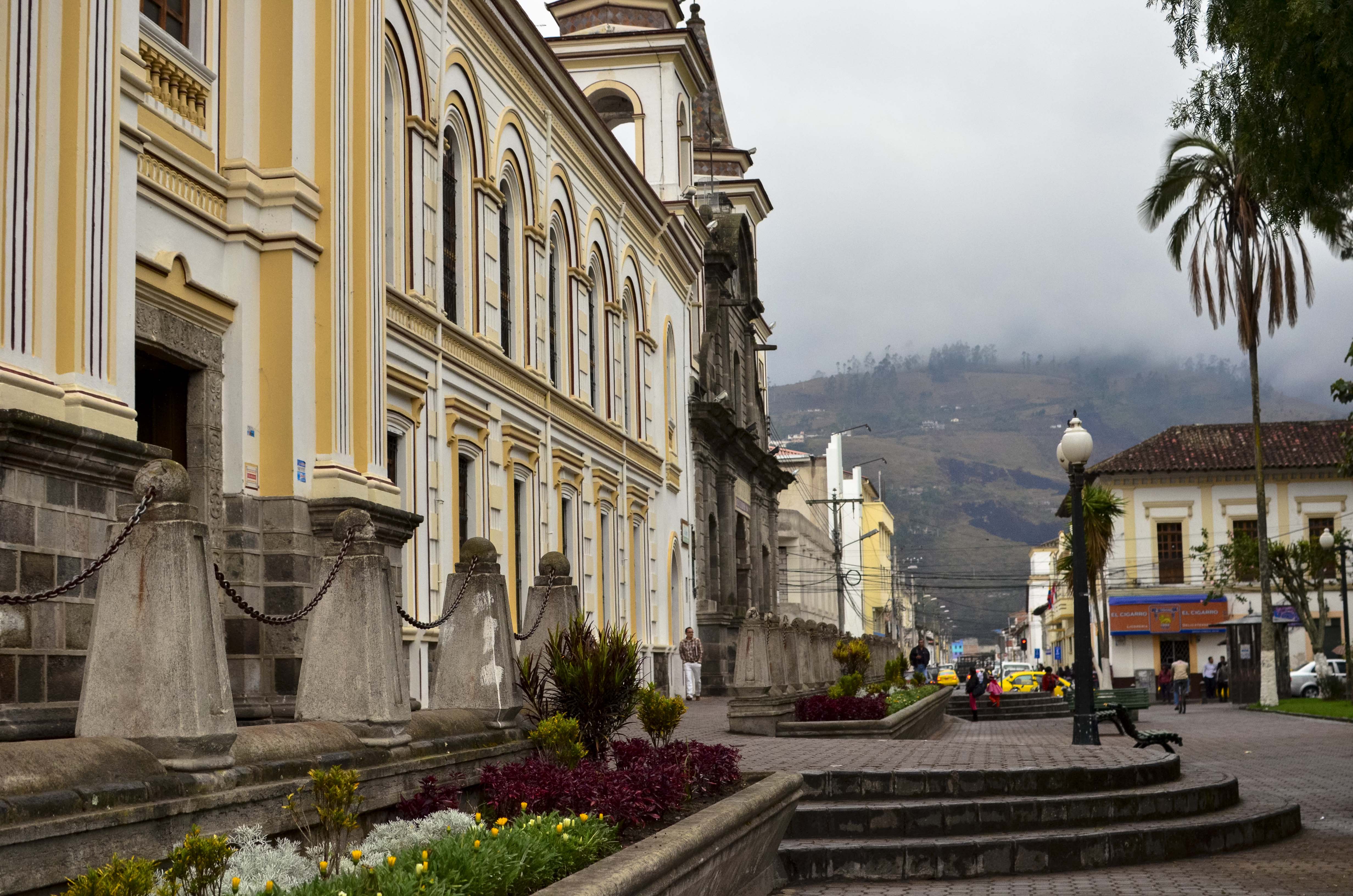
We had been carefully timing our trip to the area entirely for a special live event that only takes place in the early Saturday morning hours in a mountain city called Otovalo. Since this was about an hour away from where we were staying, we caught a bus in the AM out of Ibarra and were transported back in time to a hub that is accessed by the thousands of indigenous Ecuadorians that live in the mountain villages nearby. The bus station was a busy, chaotic scene complete with lines that didn’t seem to make any sense, food stalls, and lots of Ecuadorians traveling to all parts unknown. We stepped off the bus and immediately gravitated towards one of my favorite businesses in Latin America, a Panaderia. Fresh baked Latin bread, croissants, and sweet treats get me every damn time. After stocking up, we set out walking with our gear to a dreamy hostel (Hotel Riviera Sucre) that Elissa had found run by a German couple that made Otavalo their home due largely in part to love at first site. The city, which is inhabited by roughly 90,000 people, was originally settled in due to the rich volcanic soils the nearby mountains possessed. These nutrient rich soils were ideal for supporting a natural agricultural economy. The volcanic peaks of Imbabura and Cotacachi reach dizzying heights of 4630 meters and 4995 meters, respectively, and provide a beautiful backdrop to the colonial architecture found throughout the city.

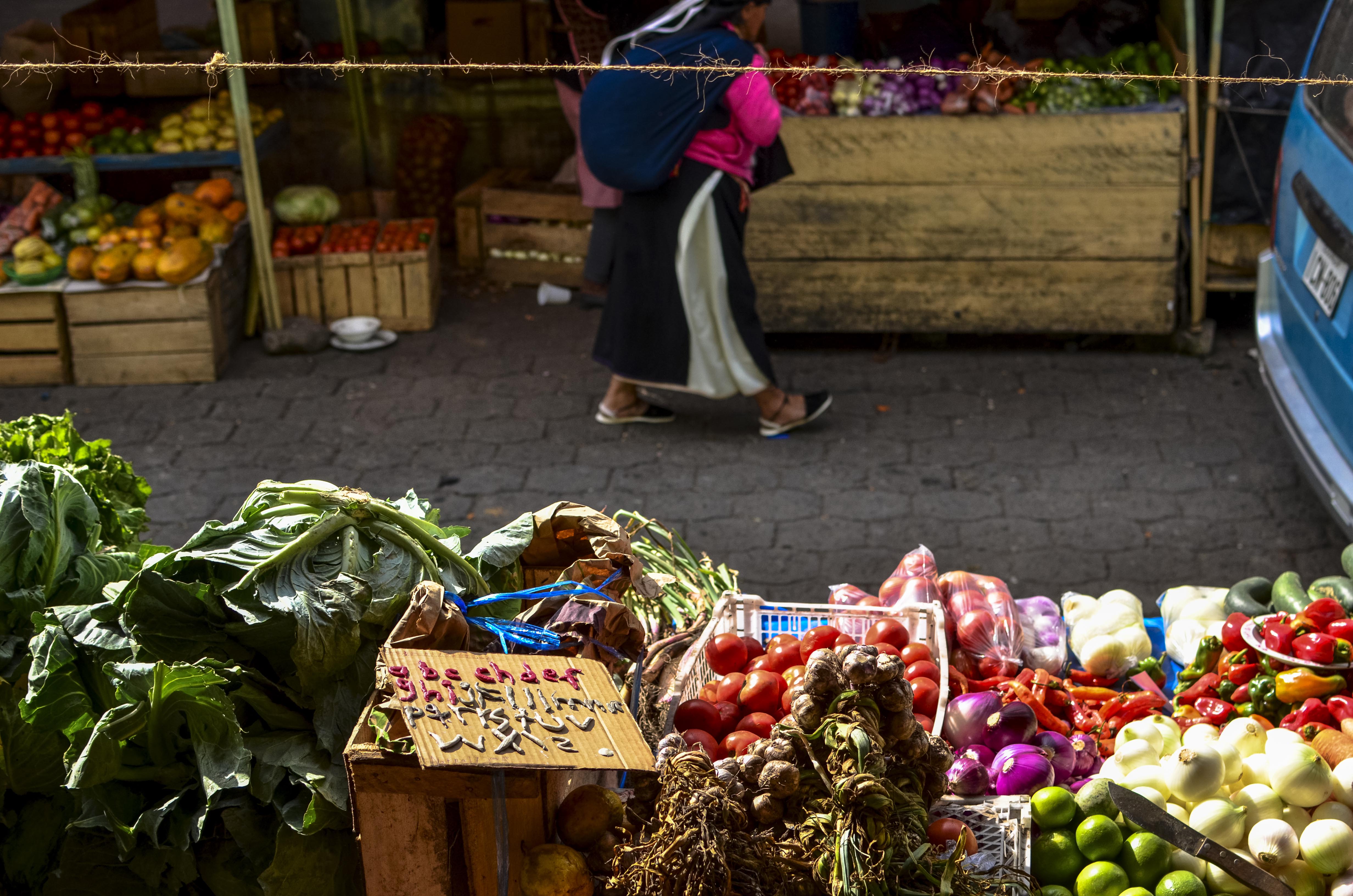
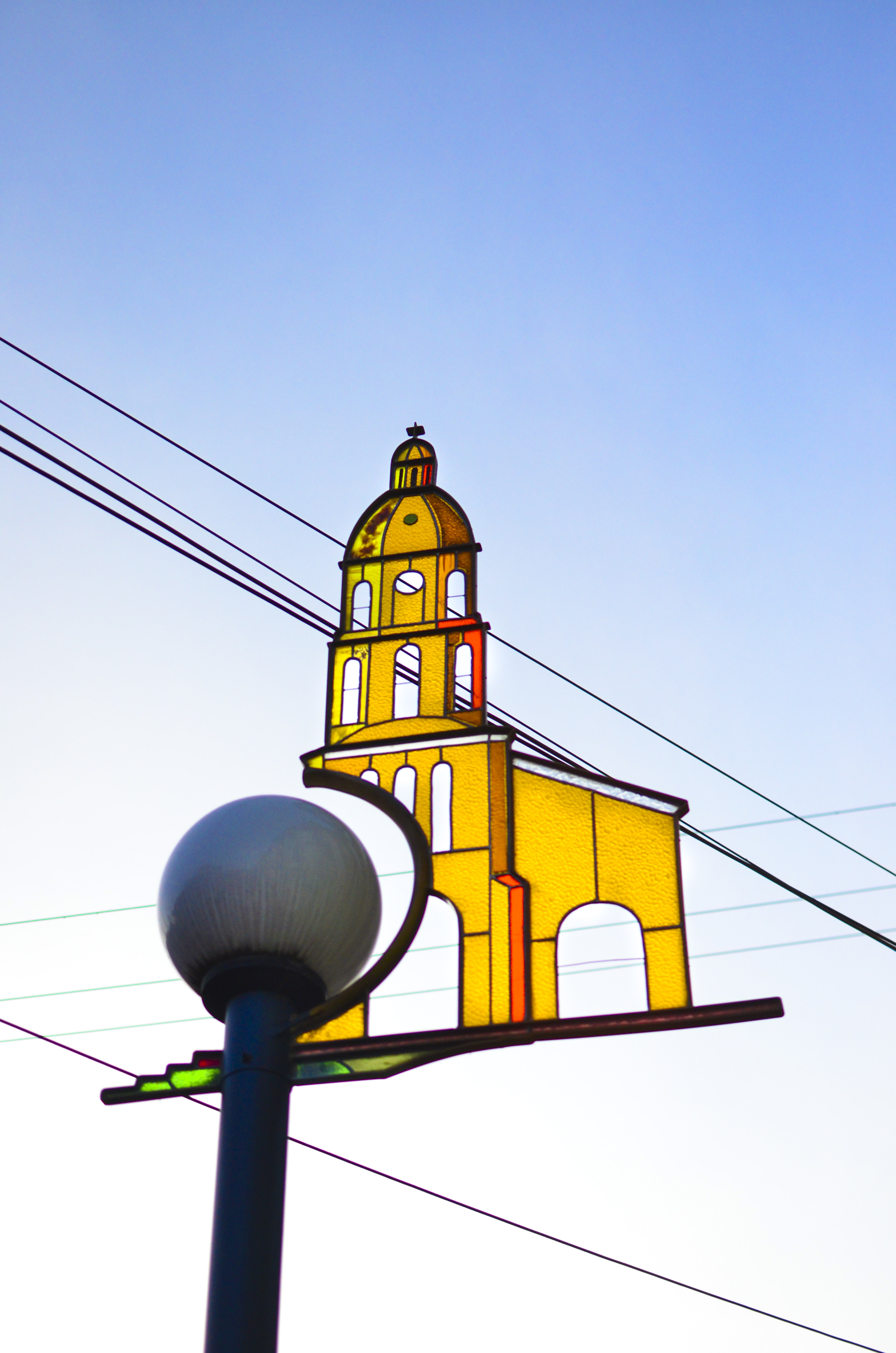


We immediately set off exploring this beautiful old city and quickly found out that it was much more up to our speed than Ibarra. Otavalo had a fantastic architectural appeal to it’s beautiful colonial buildings, antique storefronts with large glass windows, ancient doorways with antique locals eying the scene, cobblestone streets, and beautifully dressed Ecuadorian men and women adorned in traditional garb. Otavalo and it’s residents, or Otavaleño, were warm and welcoming people in every interaction we had. I walked right into a tailor’s shop and asked if I could photograph his hands for a project I dreamed up, and without even thinking about it he replied “Si, claro”. Most Otaveño were indigenous, and held onto the customary ways of their culture and predecessors. I felt like a giant amongst the crowd when walking around the noticeably shorter residents, towering over the beautiful faces that were milling about. Their tales were silently told through the deep wrinkles on their honest faces, their piercing eyes, and hardened hands. We instantly melted into the plazas that housed brightly colored churches, open air markets, and food mercados.
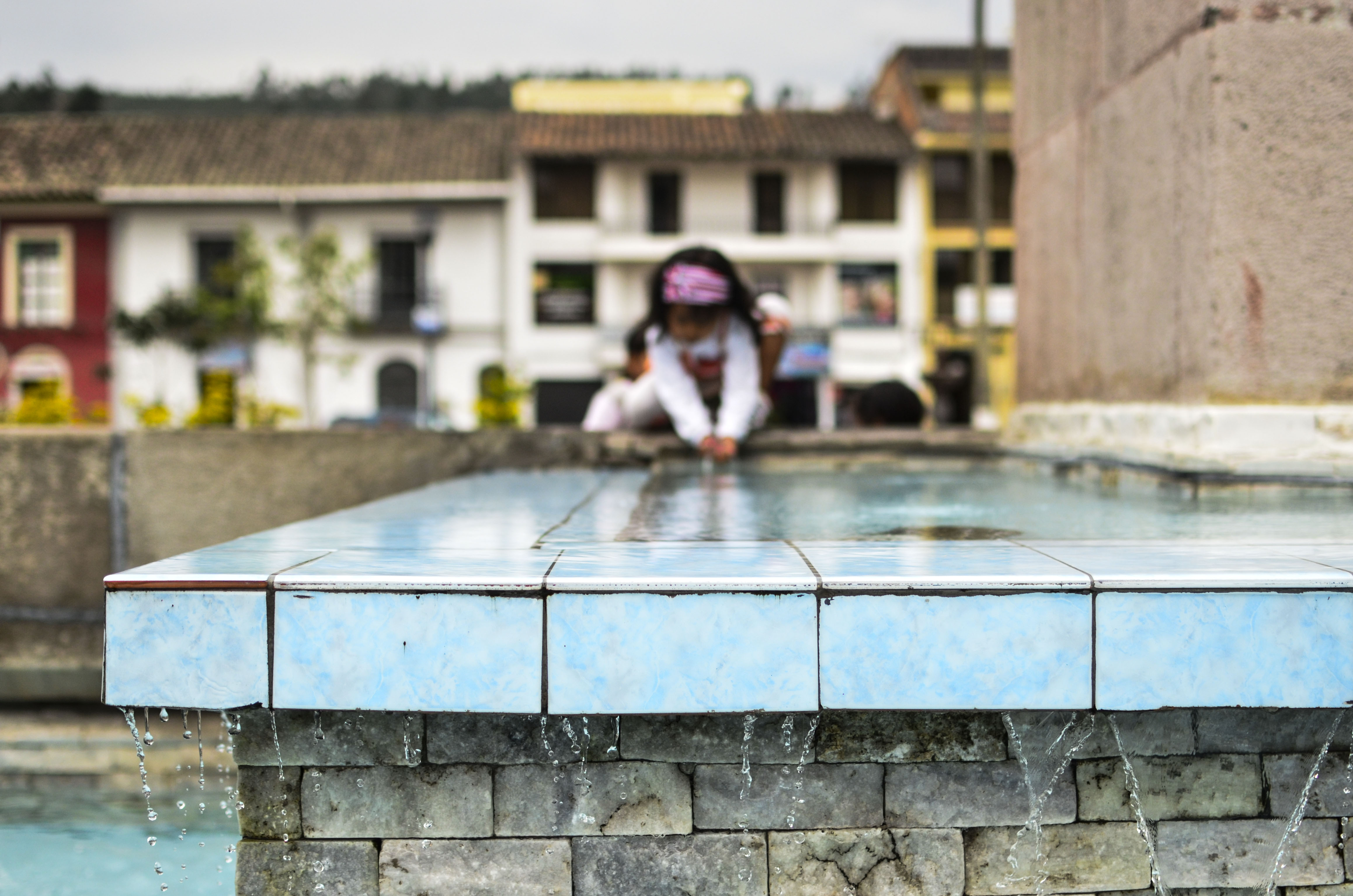


My favorite place to be when traveling is surrounded by traditional food. Whether it’s put onto a plate and ready to eat or in it’s most simple, uncooked form on a wooden table waiting to be bought or traded for, food has a special place in my belly. I could spend an entire day, sunrise to sunset, in the depths of a lively mercado watching the action. There isn’t a better place to get the freshest cuts of meat, large bundles of fruits and vegetables, or a quick set lunch of real, whole foods cooked in front of your eyes. Mercados are places that have some of the most honest and genuine transactions on the planet. Food sustains life, and life is preserved through it’s trade in this part of the world. Fiberglass ceilings in the depths of the mercados of Otavalo filtered light in such a way that made my images seem almost ethereal. Every day Otalveño go to these markets to get the ingredients they need for home cooked meals, to grab a quick al muerza, or set up shop to sustain a living from the produce themselves or their family cultivates in the surrounding lands. It’s not uncommon to see a short, sturdy, weathered Otalveña walk past your side with a large bag of potatoes slung over her shoulder and a live chicken under her arm. This mercado had all the ingredients needed to capture my attention, and I would find any excuse to go back to try and soak in that scene.


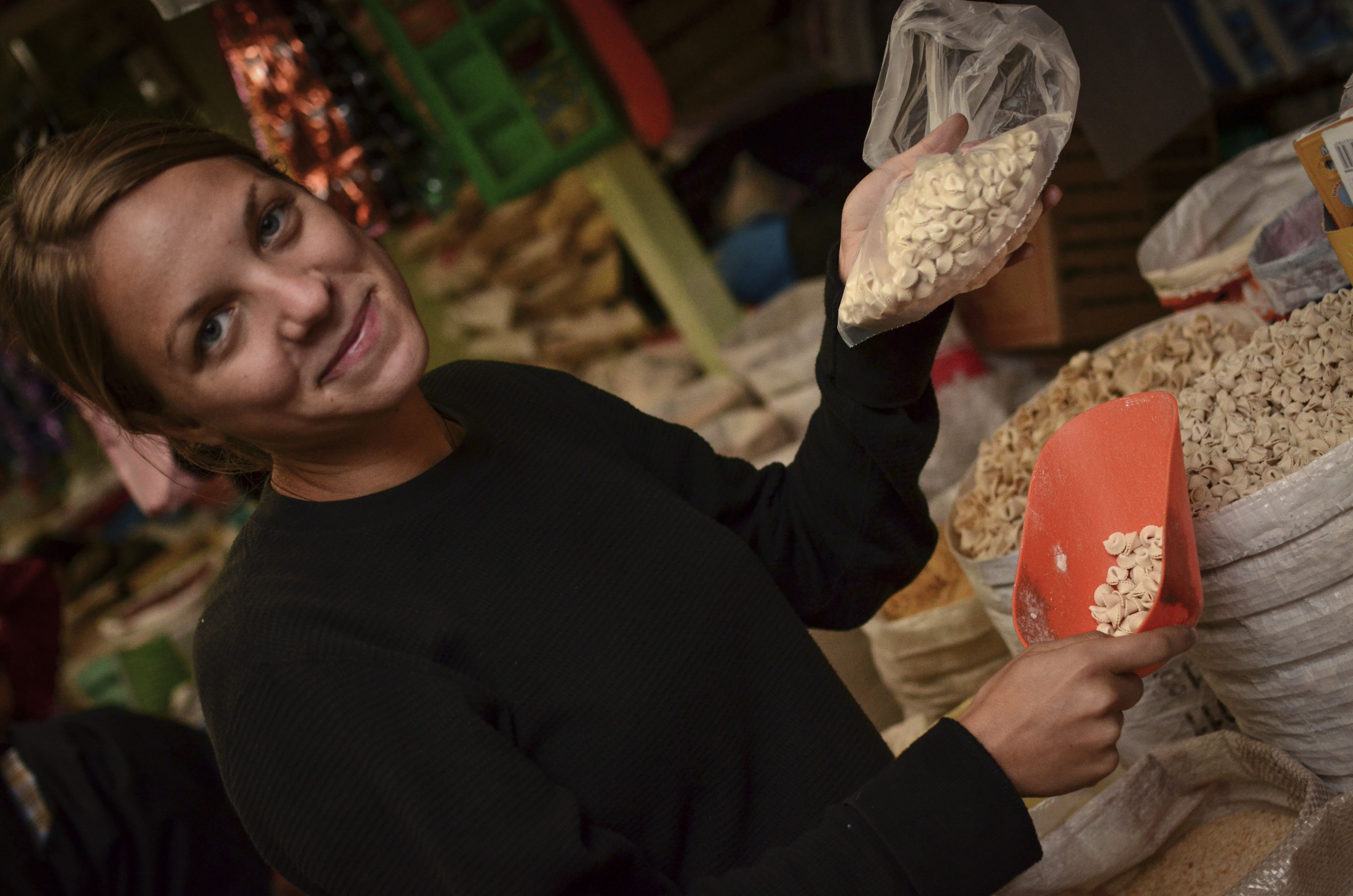


The first whole day we had in Otavalo was actually spent getting out of the city and up into the mountains. We read that there was an easy way to get to a lake for a birds eye view of Cotacachi, one of the highest peaks in the area. We made our way back to the bus station to get a ride to a tiny village, transferred to a collectivo, and went up into a national park and recreational area. Our gentle old driver dropped us off on the shore of a deep blue colored lake that lives in the crater of a past eruption that surely shook the earth. The deal we struck with the driver was to swing back in around 4 or 5 hours to pick us up lakeside where he left us. The area looked pretty desolate and carried the low season mid-week pace of life without another soul sight. We hiked up a short trail to a restaurant that was perched on a cliff overlooking the lake and took in a sweeping view of the lake and volcano. There weren’t any signs of life at the establishment, so we continued along the driveway and out to the road to hike around the lake for a while. Aside from the occasional hacienda here and there, there was not much life around this stunning setting. We played in the sun for a few hours, watching the colors of the water change with passing clouds. We killed some more time exploring what felt like abandoned homesteads, imagining what living at such a high altitude would be like. Eventually we made our way back to our pick up point, and sure enough our driver had returned to take us back into town to catch a bus back to Otavalo. A casual glance in a mirror let me know that I had severely burned my face in the high altitude sun after a mere 2 hours of partial exposure.
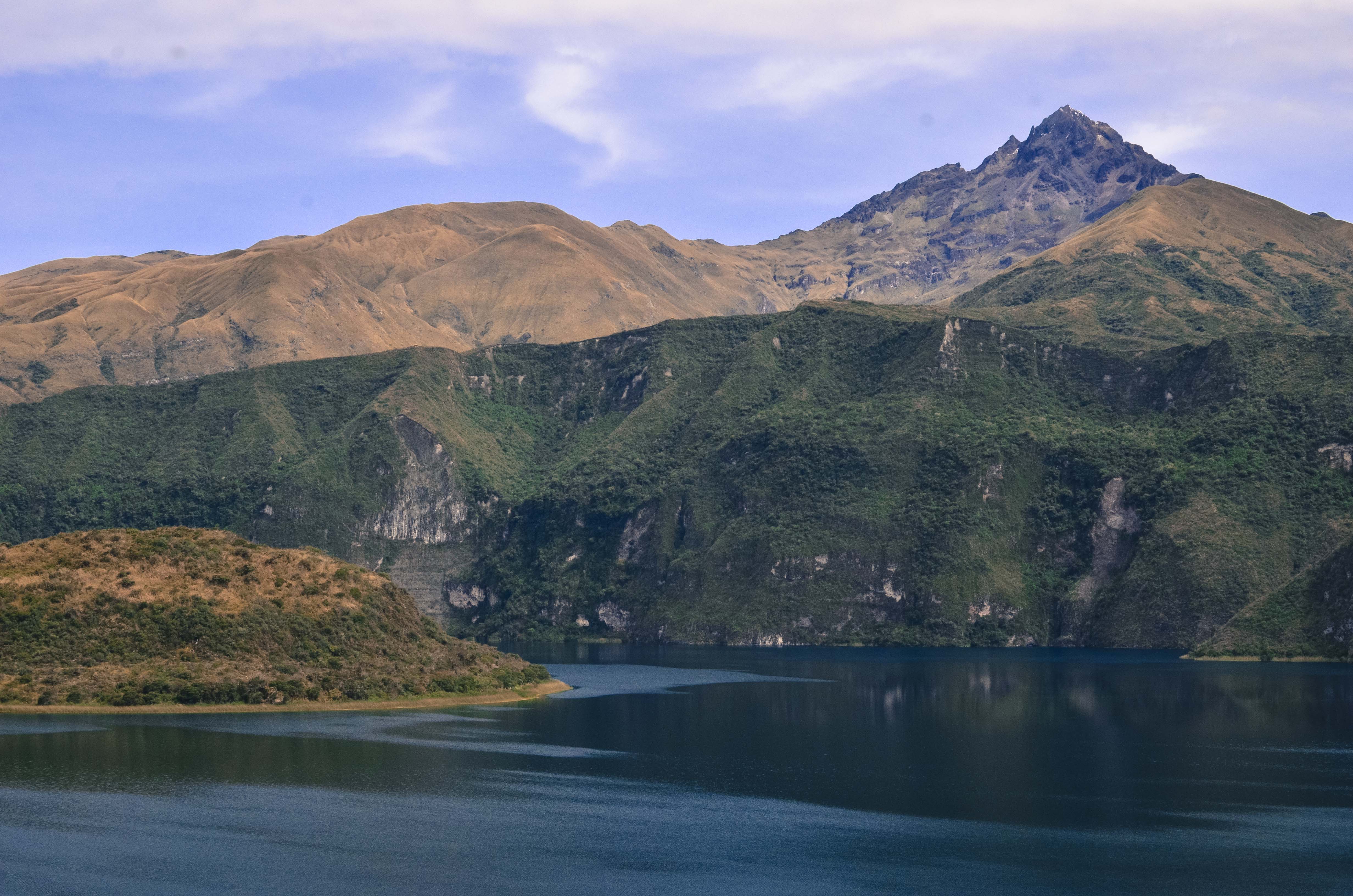

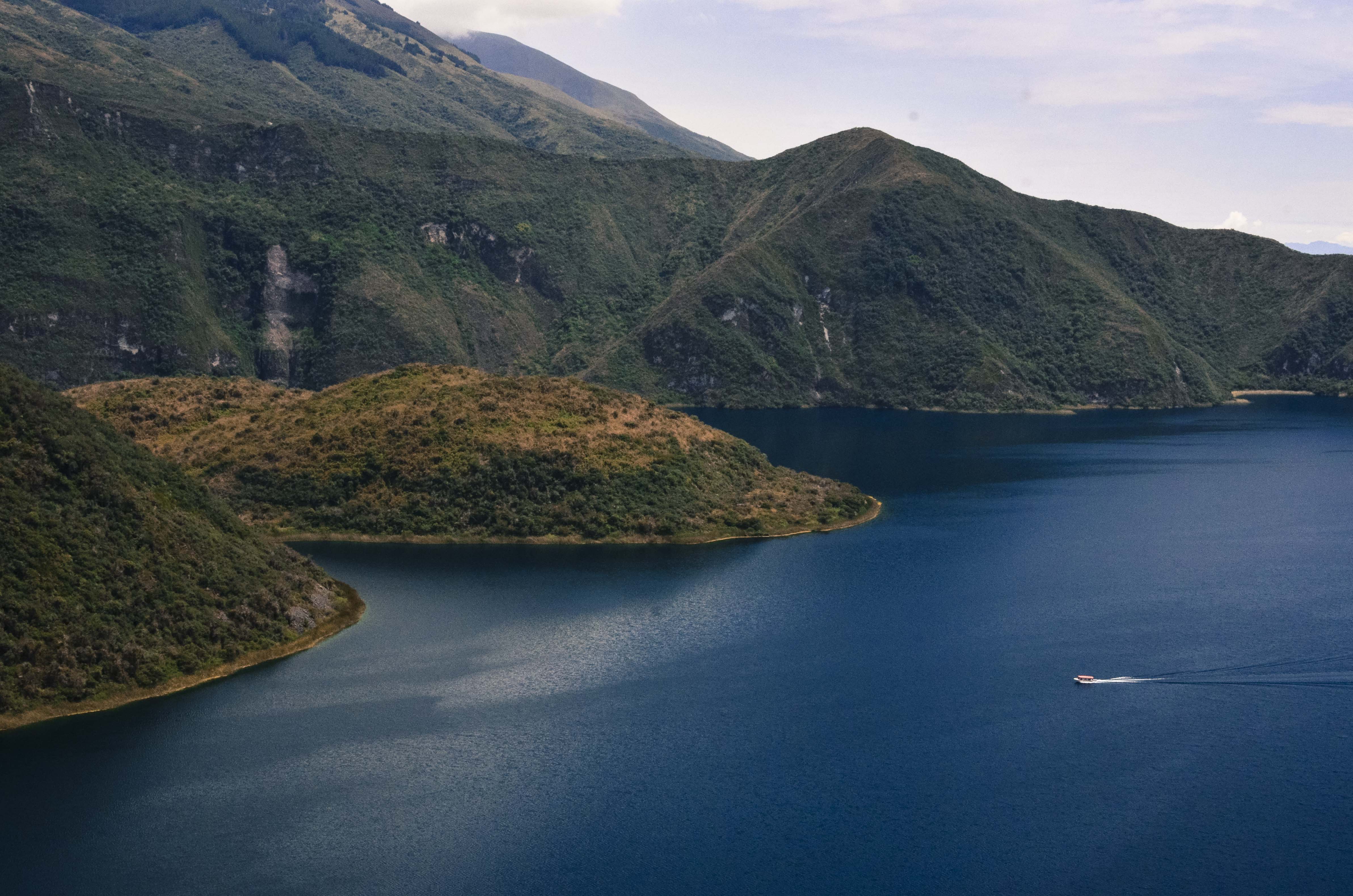


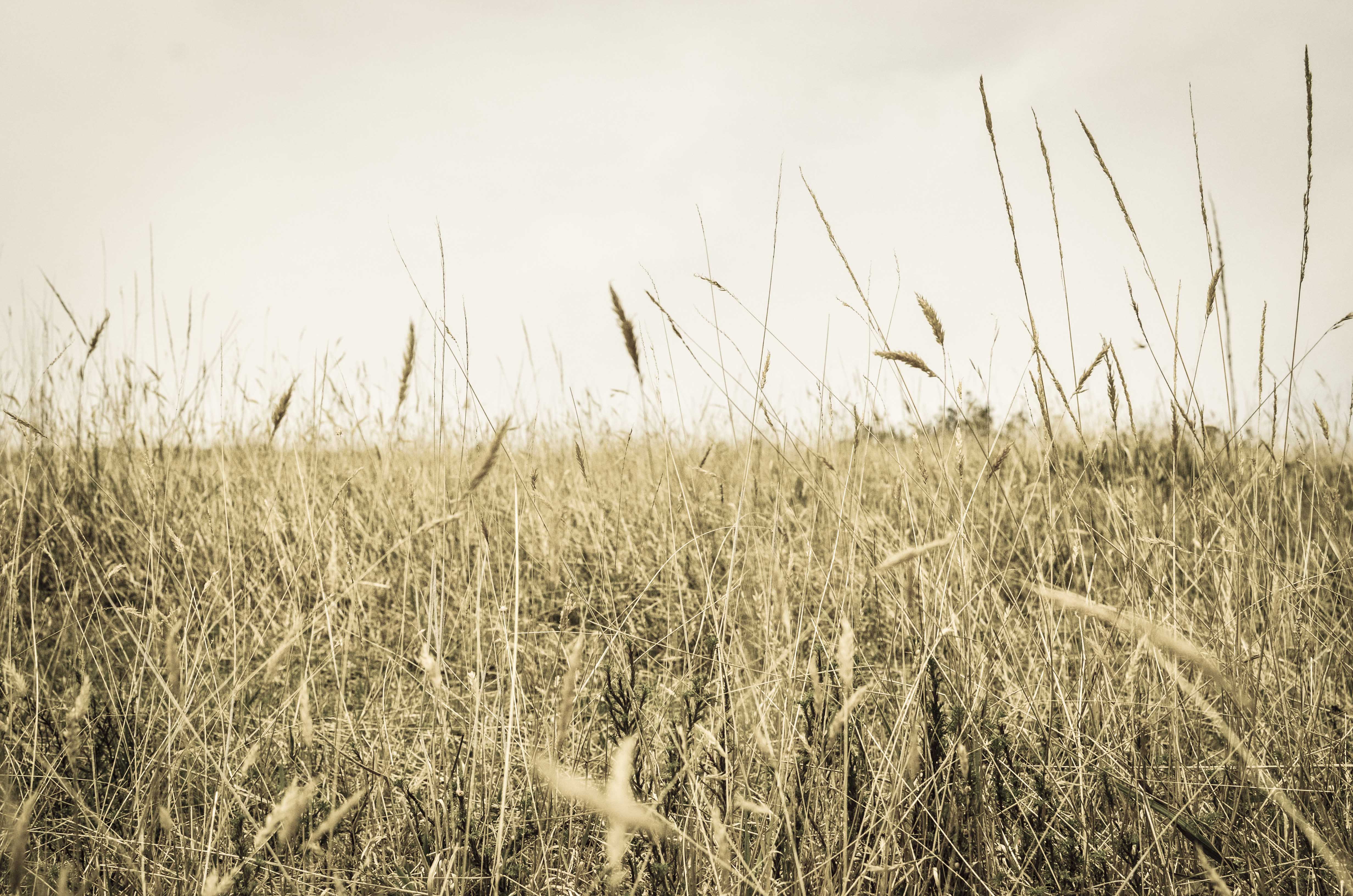
The next day was the big day for our adventures in Otavalo, and it was actually the prime reason we decided to visit the area. On every Saturday the city becomes inundated with families toting extremely large sacks full of mostly hand made textiles, clothing, sculptures, souvenirs, and livestock to sell to the masses. Yes, I wrote livestock. We knew beforehand that the live animal market was going to be the highlight of our visit to the fertile valley so we came emotionally prepared. The dusty streets at 6AM were filled with hundreds of Ecuadorians marching uphill to either shop for or show off their prized pigs, sheep, chickens, cows, ducks, and guinea pigs to prospective buyers. The scene looked a little intimidating from afar; ahead of us was a sea of pea green fedoras with a few small open veins of earth that let shoppers into the swollen field of the animal peddlers. Tiny but tough Otavaleño tried to maneuver freshly purchased 100+ pound pigs while every extremity of live chickens were being examined with the kind of eyes normally found near the sales rack of TJ Maxx. Cars would come to a halt to let a newly purchased cow get walked across the intersection or to drop off their elders curbside. After putting down a few fresh made doughnuts, we gathered up the courage to proceeded into the masses. Visually, there was too much to process in the moment. There were hundreds of people tightly stationed next to their live produce, bartering and haggling over prices hoping to find some middle ground and make the coveted sale. It was hard to create images in the harsh light while being nudged in the single file fashion we found ourselves in. It was also hard to get a great snap while constantly being offered animals by the men and women lining the path. I wasn’t sure what two backpackers would do with a bag full of live guinea pigs, but that question was never approached. We witnessed several dozen transactions take place, watching the magic of hand to hand sales transpiring just as they always have been. Money was exchanged usually without the hint of a smile, just business as usual.


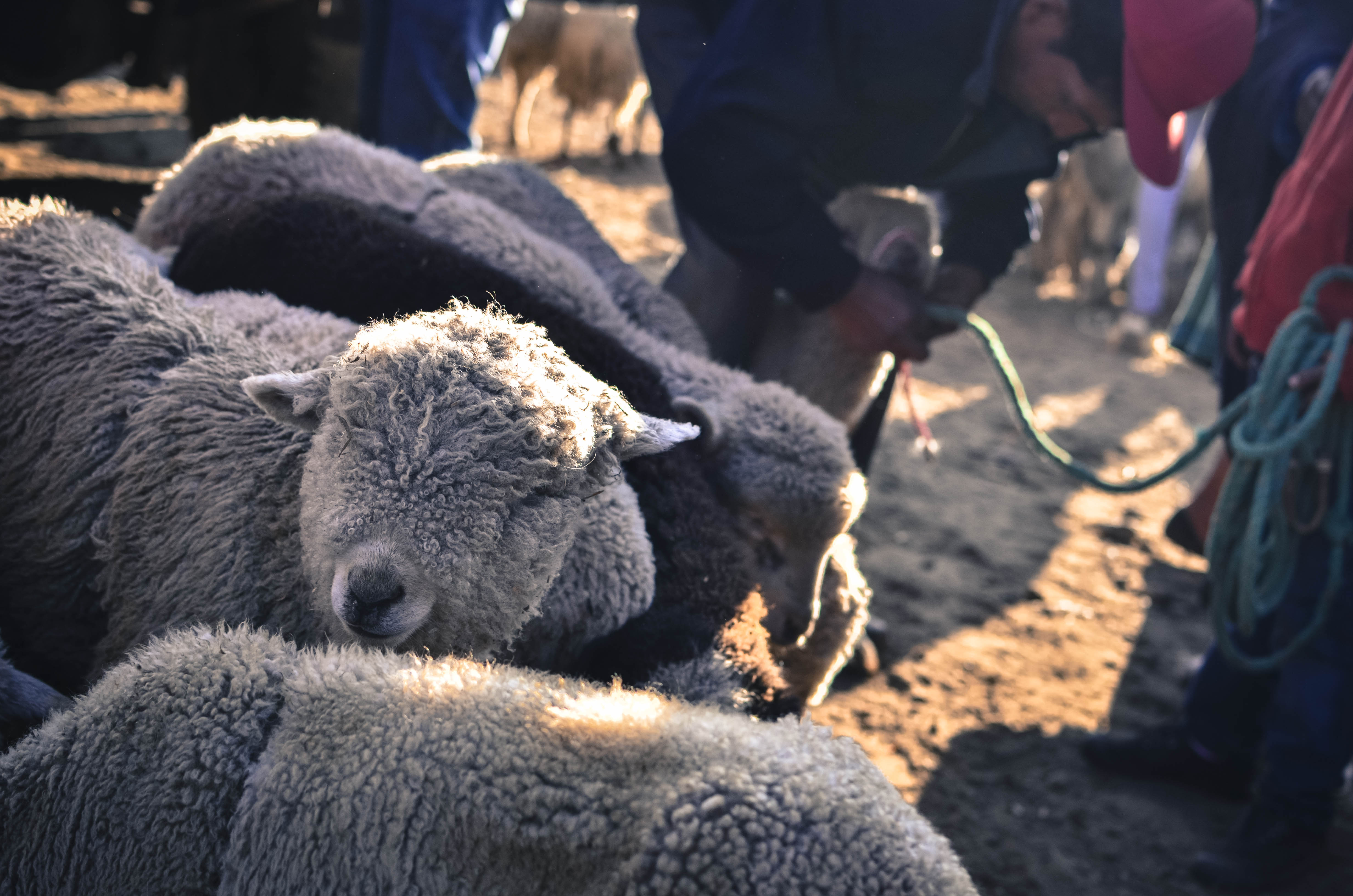


The market was separated into several different zones that were distinguished by which type of animal you were looking for. The entry area seemed to be delegated for small furry and feathery animals. As we transitioned into an area with a little more breathing room we had found ourselves in the pork isle. Here there were pigs of all sizes to buy, including massive 200 lb porkers that seemed to consistently have about a dozen people looking over them wondering if they should commit or not. After we left the pig zone we encountered sheep in clusters of 6 or so. Farmers were showing off their wool and healthy limbs to anyone who gave so much as a glance their way. A fence separated the sheep from the cattle corner where we watched how naturally the sellers could handle a group of cows without any assistance. Horses were near the end of the field and were accompanied by cowboys wearing tall hats and earthy colored slacks. Just above this cash only commerce area were booths selling traditional Ecuadorian breakfasts consisting of meaty soups and plates of papas y carne. Elissa and I sat up on the hill and watched the entire market operate as a whole, observing how all the small parts and gears somehow created a perfect harmony of trade. We were watching a way of life that is so far from westernized approaches of buying food but made so much more sense than how food is produced and sold where we’re from. The practices may seem cruel or unusual to our western ways, but this economy has existed longer than we have been established as a country, and it still operates on the same basic level. Travel is fostered by moments like these, where you are an infinite distance away from your comfort zone in life, observing traditions first hand that satisfy your appetite for wanderlust but make it want more in the same breath. Authenticity breeds the urge to travel, and to see something real and in the flesh. ( I scratched the surface on this experience in a weekly photo challenge a while back, click the link to check it out theadventuresofadr.com/2012/10/26/weekly-photo-challenge-foreign/ ).


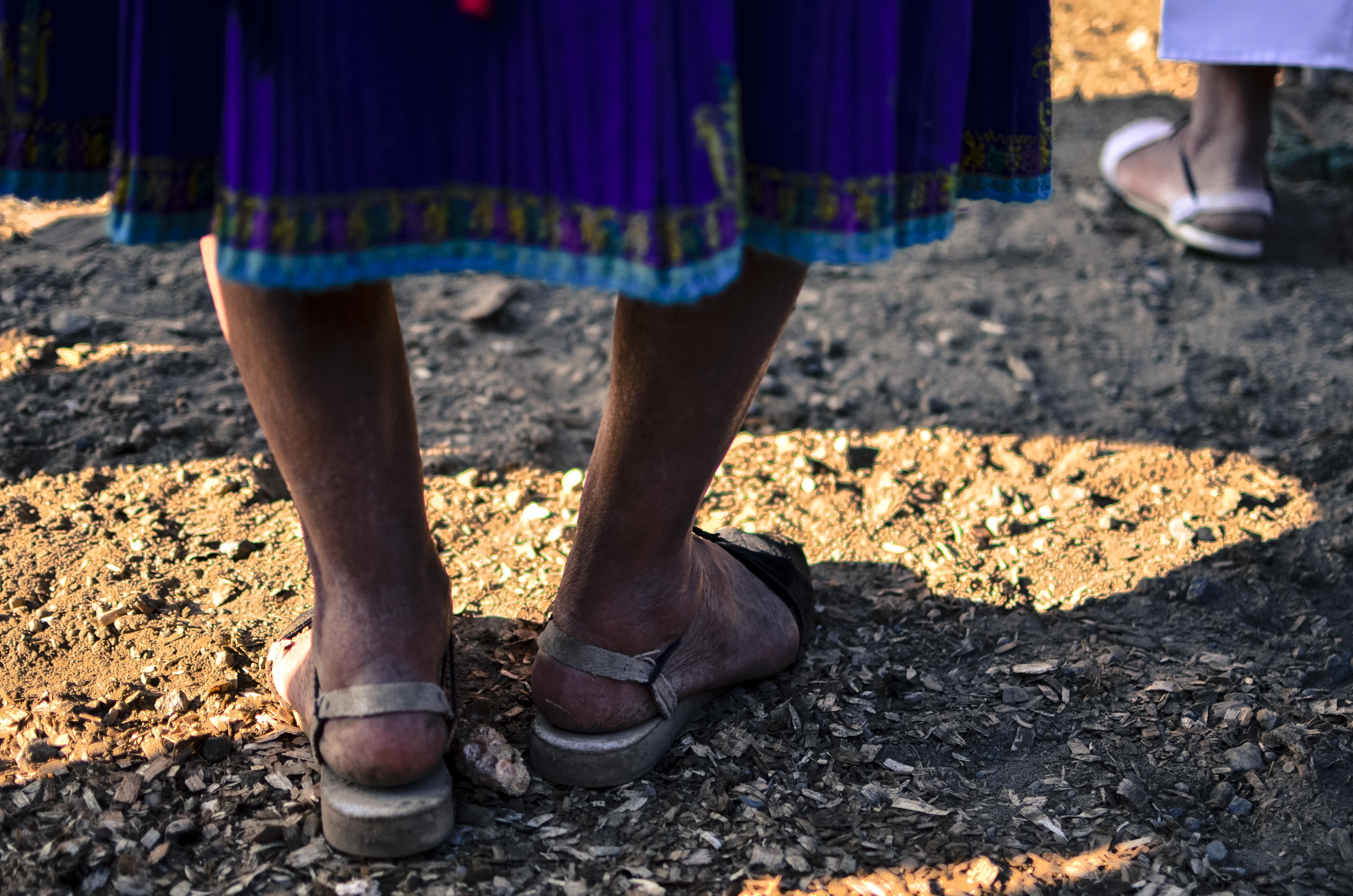
On our last spin through this open air animal market Elissa bought a piece of hand made rope a woman was selling for the purpose of transporting your newly purchased 4 legged item under normal circumstances. For her, it was an authentic souvenir that could also be purposefully used along our travels if need be. We walked back down the cobblestone roads lined with numerous stalls with handmade jewelry and made our way towards the center of town. The weekends engulf the city, turning a huge footprint of the streets into one big hand made goods market. We had our eyes set on purchasing a llama blanket, amongst other gifts for family members back stateside. Stalls were swallowing up entire roads as we approached the main market in the Plaza de los Ponchos. The plaza was designed by a Dutch architect in the 70’s and had hundreds of mushroom shaped awnings coming out of the ground, acting as stalls for purveyors to set up their tables with a little protection from the elements. We shopped around and noted the prices of items in different stalls until we figured out where the bargains lived. Everyone at the market was chatty, hoping to score a sale amidst a sea of other stalls with similar items. We took ages to decide on which beautifully hand carved gourds depicting indigenous Ecuadorian tales told through images to gift to our loved ones. After getting our holiday shopping done, we hung around to watch the market break down. Like magic, we saw huge bundles of blankets, wool sweaters, hats, toys, jewelry, costumes, and musical instruments disappear in a methodical fashion. Large burlap sacks the size of refrigerators packed with fabric were carried on the backs of tiny Otavelño across the market and loaded onto old flatbed trucks. In a little under an hour the entire market was nearly empty from the hundreds of stalls that inundated the plaza earlier that day.


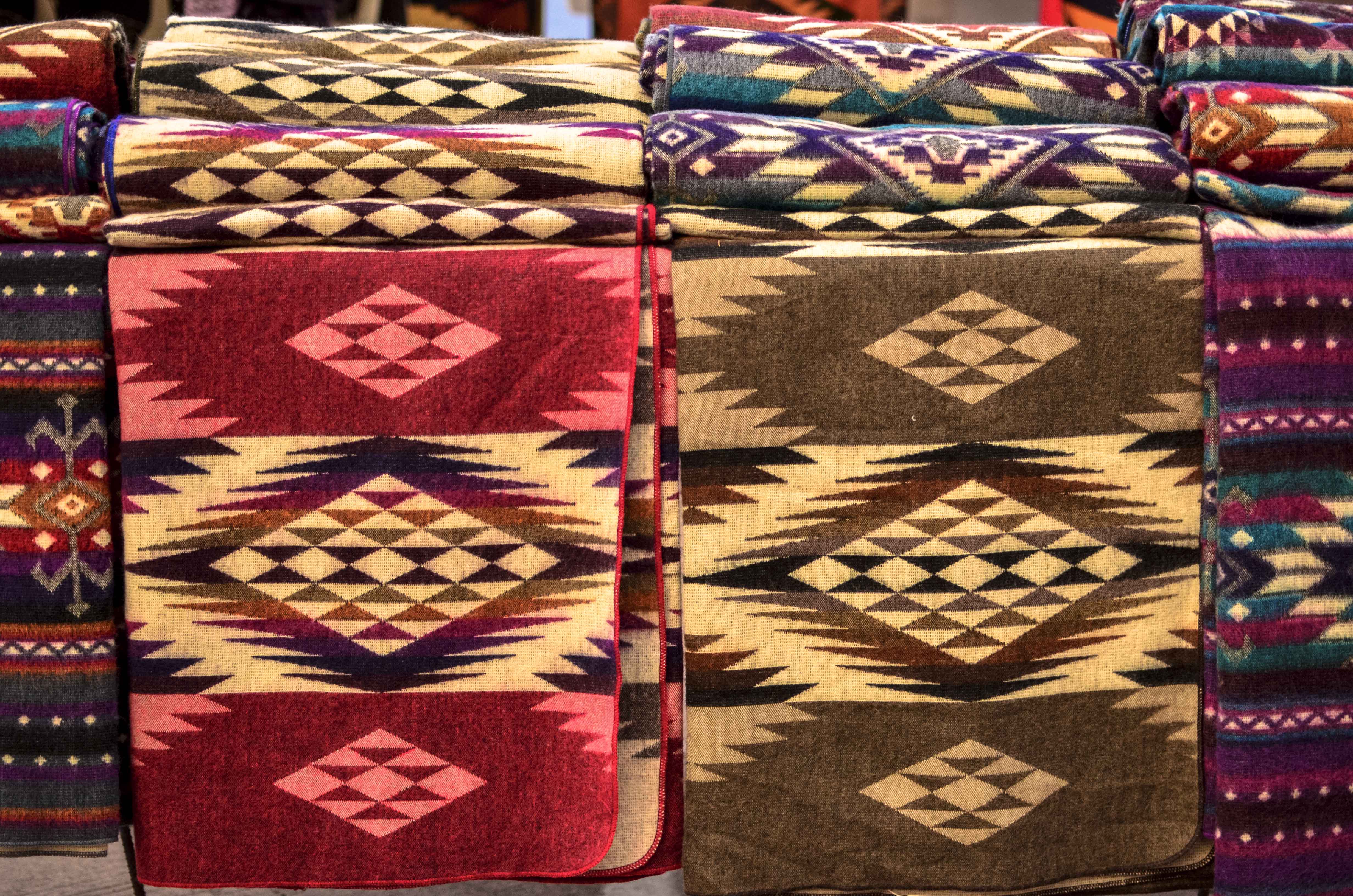


Otavalo was a memorable stop along our lengthy trail through Latin America. I would highly recommend that anyone going near Quito should set a few days aside to make the trip to Otavalo. Seeing the age-old ways of the weekend market through our own eyes enhanced our definition of Ecuadorian culture. The differences between cultures are a pertinent part of what makes this world a beautiful place to explore and discover.


Come away with me

 TheAdventuresOfDr